Heiner Müller’s „Quartet” meets Leoš Janáček’s late string quartets
With the staging of Leoš Janáček’s String Quartets No. 1 “Kreutzer Sonata” and No. 2 “Intimate Letters” (1854–1928), we continue our collaboration with the renowned Kuss Quartet, which began to great acclaim with the Beethoven evening “Force & Freedom”. The fact that both quartets—premiered in 1924 and 1928, like Beethoven’s adapted quartets—belong to their composer’s late period and are among the Kuss Quartet’s declared favourites, inspired this programming choice.
In his first engagement with the “royal discipline” of chamber music, Janáček drew inspiration from a famous work by Beethoven – the “Kreutzer Sonata”, dedicated to violinist Rodolphe Kreutzer. Janáček’s musical reflection on Leo Tolstoy’s novella of the same name, which deals with love, sex, jealousy, and murder, allows for a thematic connection with Heiner Müller’s „Quartett”. Dramaturgically, the juxtaposition of the “Kreutzer Sonata” with Janáček’s second quartet, composed five years later, is particularly intriguing. Here the 74-year-old composer appears as a passionate lover, hopelessly devoted to the much younger Kamila Stösslová, to whom he wrote these “Intimate Letters” as tokens of his deepest longing and affection. The inversion of a possible relationship trajectory within Janáček’s catalogue – beginning with the murderous jealousy of a betrayed husband and culminating in the rapturous devotion of an enamoured man – forms a fascinating mirror game.
Heiner Müller’s play „Quartett” (1980/81) inverts Janáček’s principle of duplication: while the composer expanded Tolstoy’s sonata for violin and piano into a work for four strings, Müller (1929–1995) condensed the characters of Choderlos de Laclos’ famous epistolary novel “Les Liaisons dangereuses” (1782) into two voices. He nevertheless titled the piece Quartett, as his protagonists exchange and blur their (gender) roles – a structure that, like Janáček’s “Intimate Letters”, arises from intimate correspondence.
It is a hall of mirrors of human desire and suffering, in which Janáček’s music becomes both impulse and commentary on Müller’s literary composition. With a pair of actors, a pair of dancers, and the Kuss Quartet, we create a production that, amid profound political and social upheaval, explores the questionable refuge of the private sphere – which ultimately proves to be a battlefield of mutual destruction. These unassimilated social contradictions corrode the individual from within.
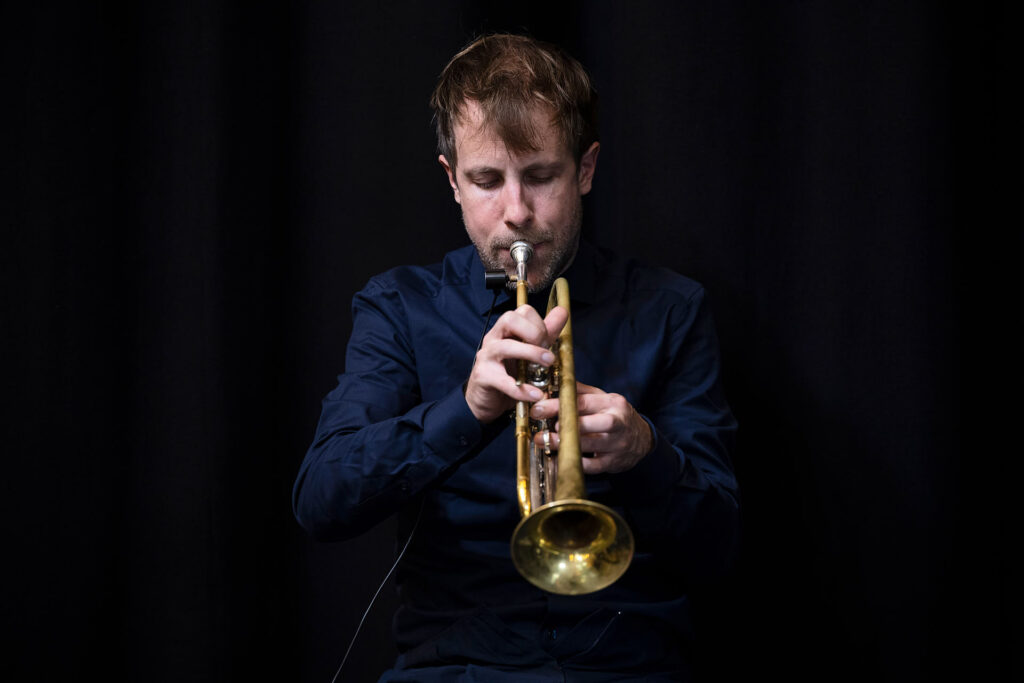
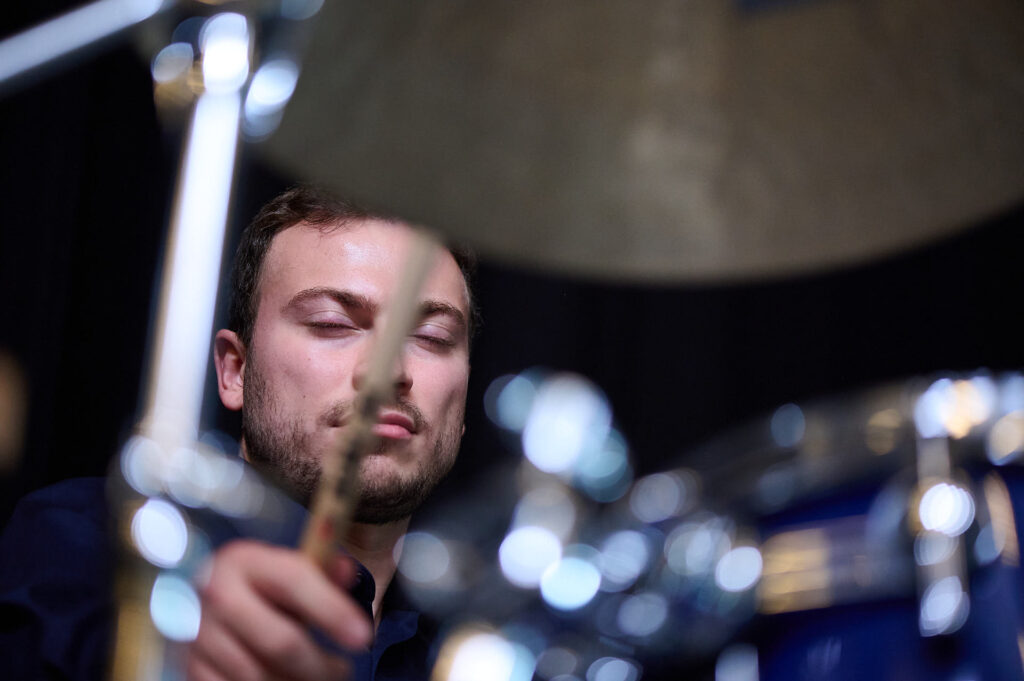
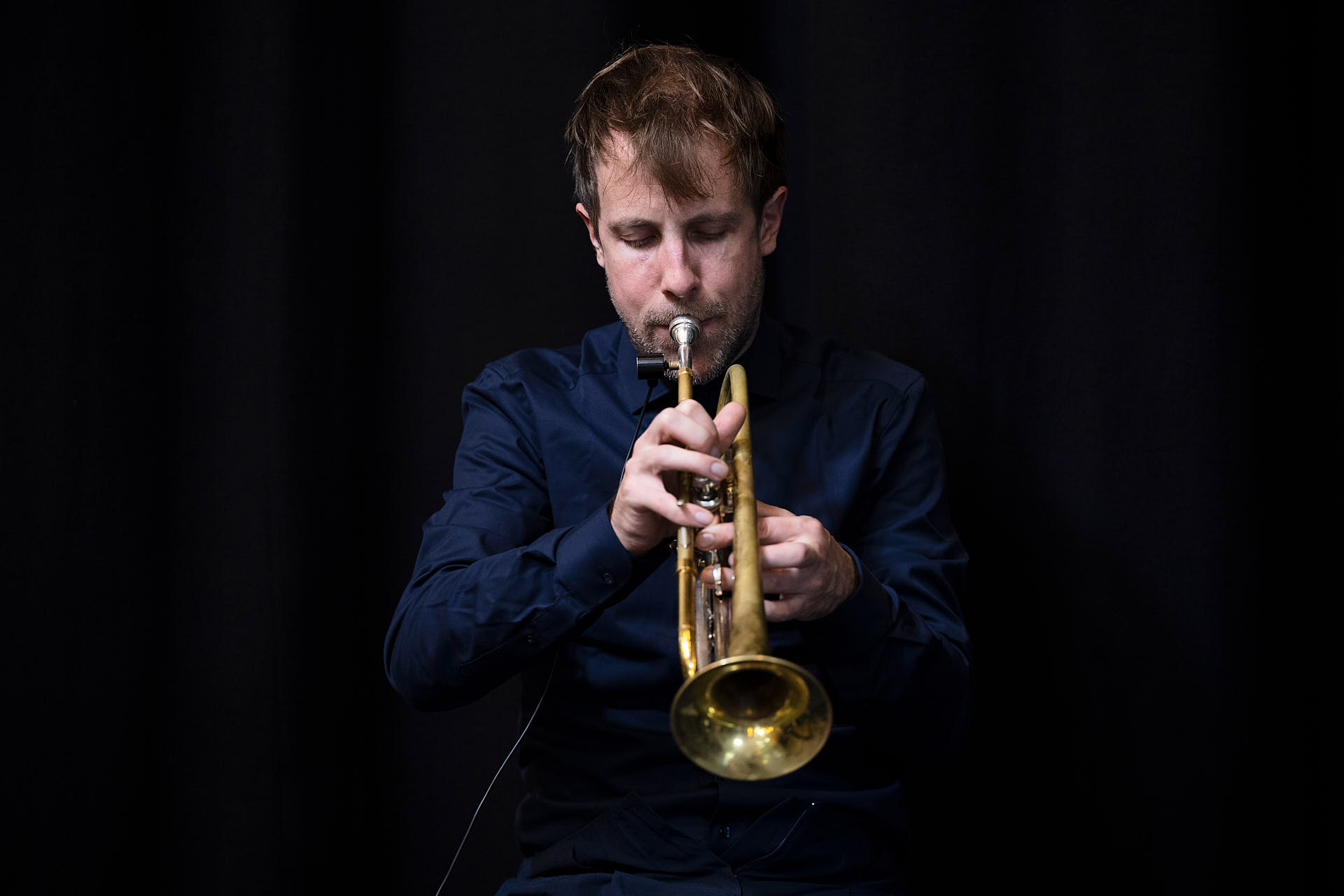
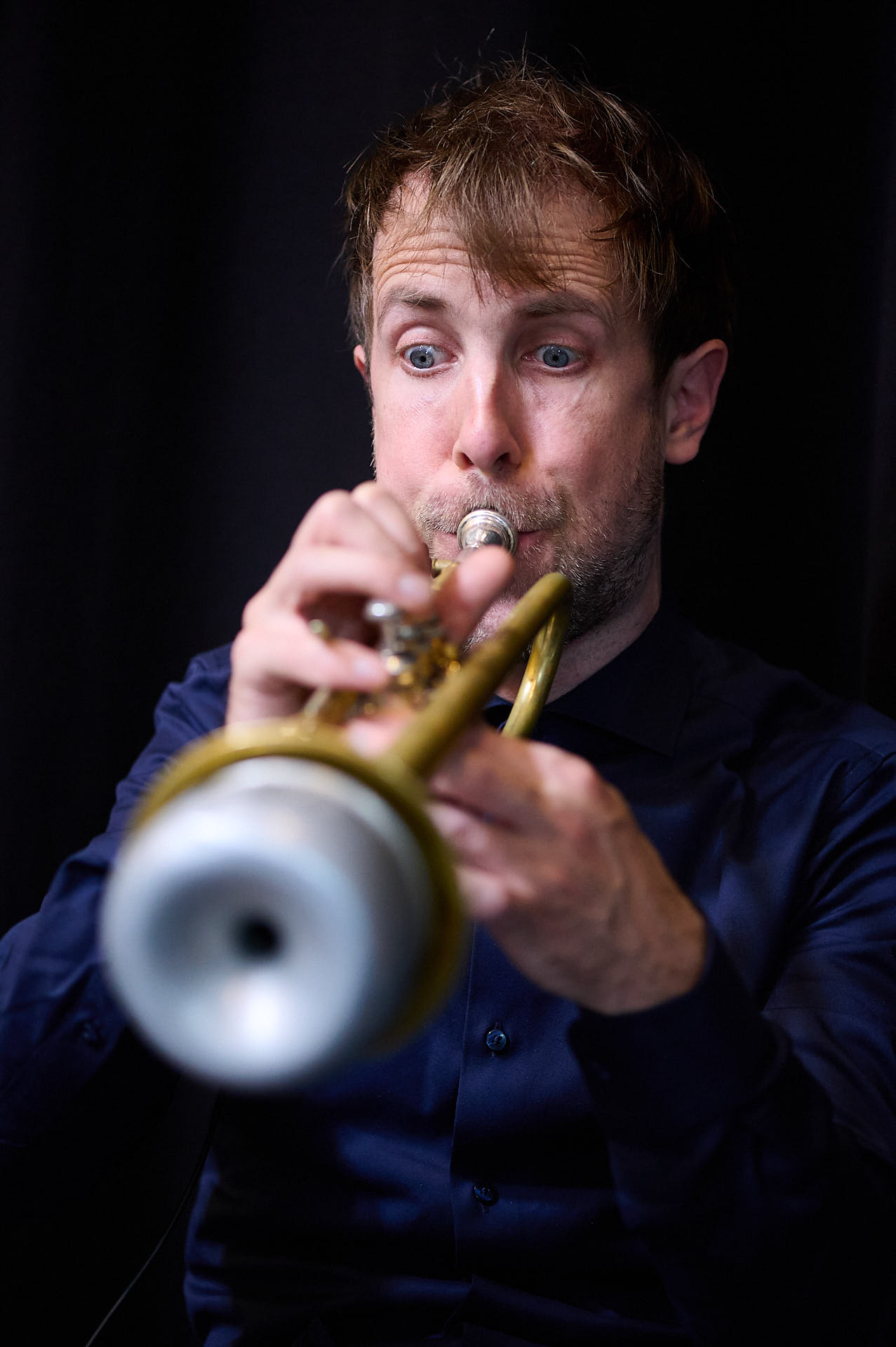
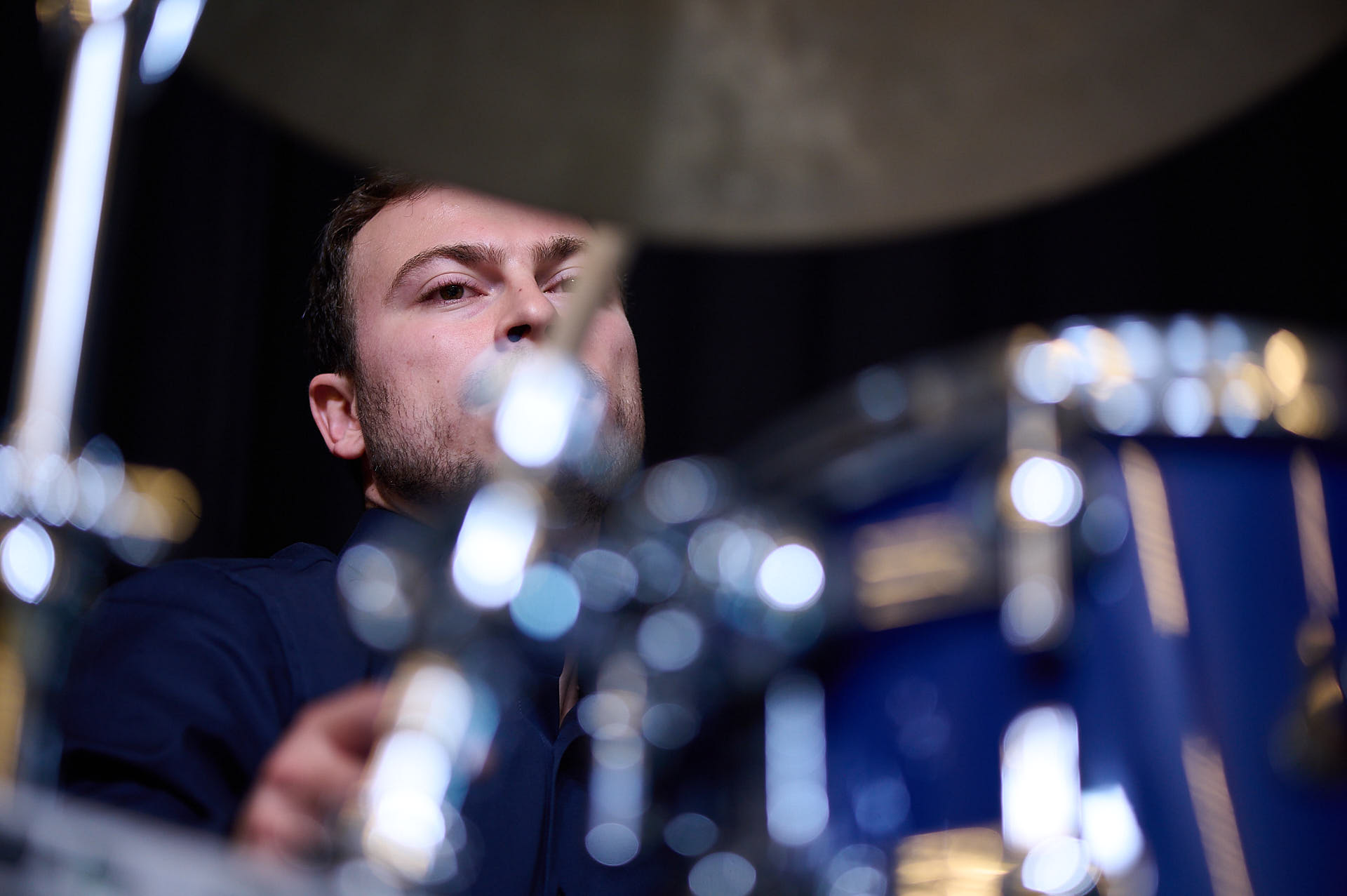
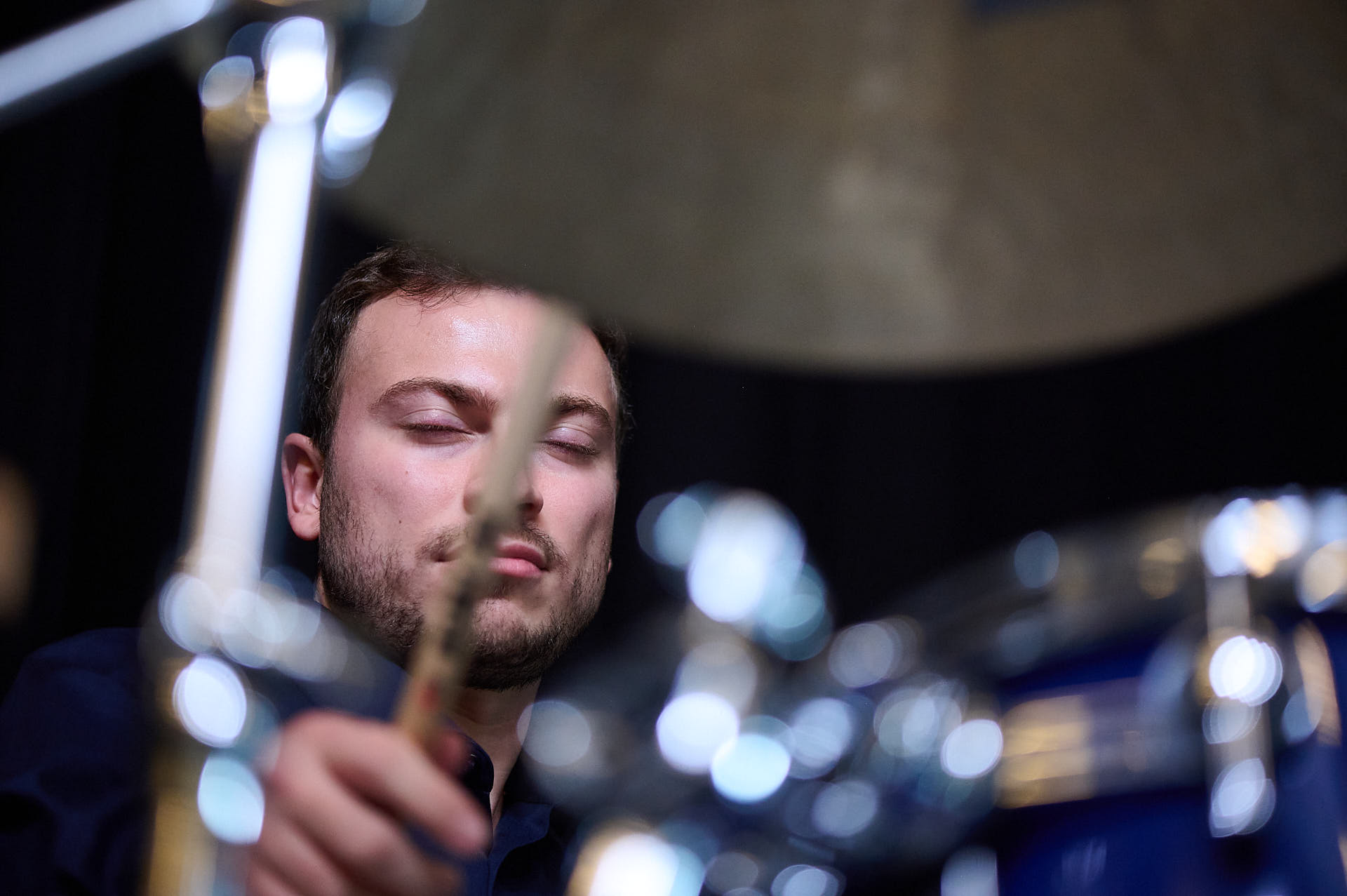
The young and versatile percussionist Lorenzo Riessler and the virtuoso trumpeter Paul Hübner lend the text both percussive sharpness and electronically enhanced resonance.
On 30 December 2025, the 30th anniversary of Heiner Müller’s death will be commemorated.
 Martin Buczko
|
Yui Kawaguchi
|
Jana Kuss-Nickel
|
Oliver Wille
|
Annedore Kleist
|
William Coleman
|
Martin Clausen
|
Mikayel Hakhnazaryan
Martin Buczko
|
Yui Kawaguchi
|
Jana Kuss-Nickel
|
Oliver Wille
|
Annedore Kleist
|
William Coleman
|
Martin Clausen
|
Mikayel Hakhnazaryan
 Annedore Kleist
|
Jana Kuss-Nickel
|
William Coleman
|
Mikayel Hakhnazaryan
|
Oliver Wille
Annedore Kleist
|
Jana Kuss-Nickel
|
William Coleman
|
Mikayel Hakhnazaryan
|
Oliver Wille
 Jana Kuss-Nickel
|
William Coleman
|
Martin Clausen
|
Oliver Wille
|
Mikayel Hakhnazaryan
Jana Kuss-Nickel
|
William Coleman
|
Martin Clausen
|
Oliver Wille
|
Mikayel Hakhnazaryan
 Yui Kawaguchi
|
Martin Buczko
|
Jana Kuss-Nickel
|
Oliver Wille
|
Annedore Kleist
|
William Coleman
|
Martin Clausen
|
Mikayel Hakhnazaryan
Yui Kawaguchi
|
Martin Buczko
|
Jana Kuss-Nickel
|
Oliver Wille
|
Annedore Kleist
|
William Coleman
|
Martin Clausen
|
Mikayel Hakhnazaryan
A pulsating dialogue between stage and music that remains true to the work’s inner tension […] In a sold-out Radialsystem, this intense, multilayered performance rightly concluded with enthusiastic applause.
In 1980, Heiner Müller presented Quartett, a chamber play of austere intensity: a two-person drama based on Pierre Choderlos de Laclos’ famous epistolary novel Dangerous Liaisons, which was adapted for Hollywood in 1988 starring Glenn Close and John Malkovich. Müller sharpens the play’s focus entirely on the antagonists Marquise de Merteuil and Vicomte de Valmont. The double indication of place and time — “salon before the French Revolution / bunker after the Third World War” — intertwines courtly decadence with an apocalyptic atmosphere.
The plot, too, is reduced to its essentials. Merteuil and Valmont play with and against one another, continuously assuming the roles of other characters — such as Madame de Tourvel or the young Volanges — in order to test power, desire, and self-assertion in the other. Language becomes a battlefield, eroticism a strategy. Beneath the precisely honed dialogue lies the weariness that has long overtaken the entangled pair. At the same time, the play is permeated by a dry, at times macabre humor that renders the abyss all the more sharply defined.
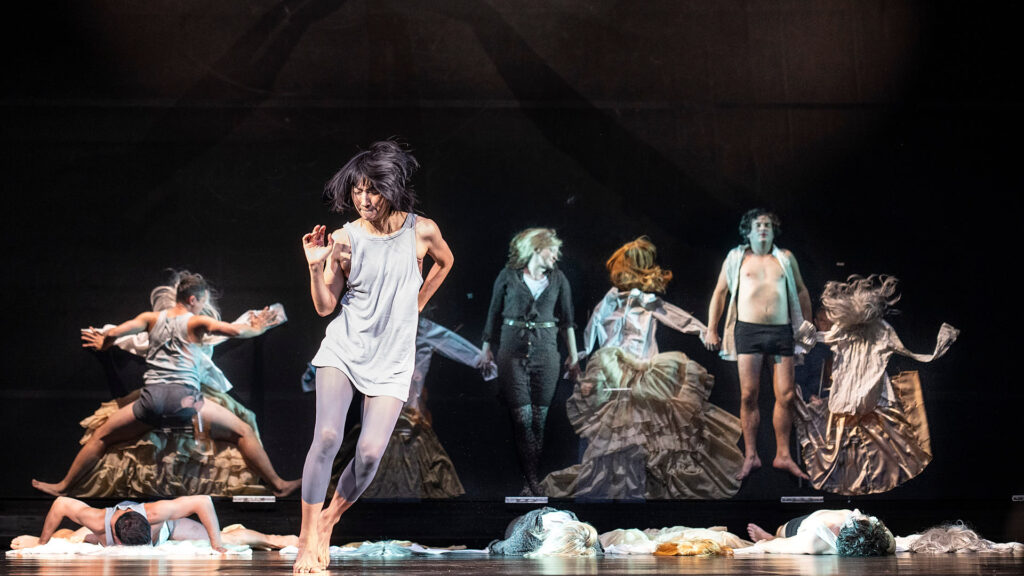
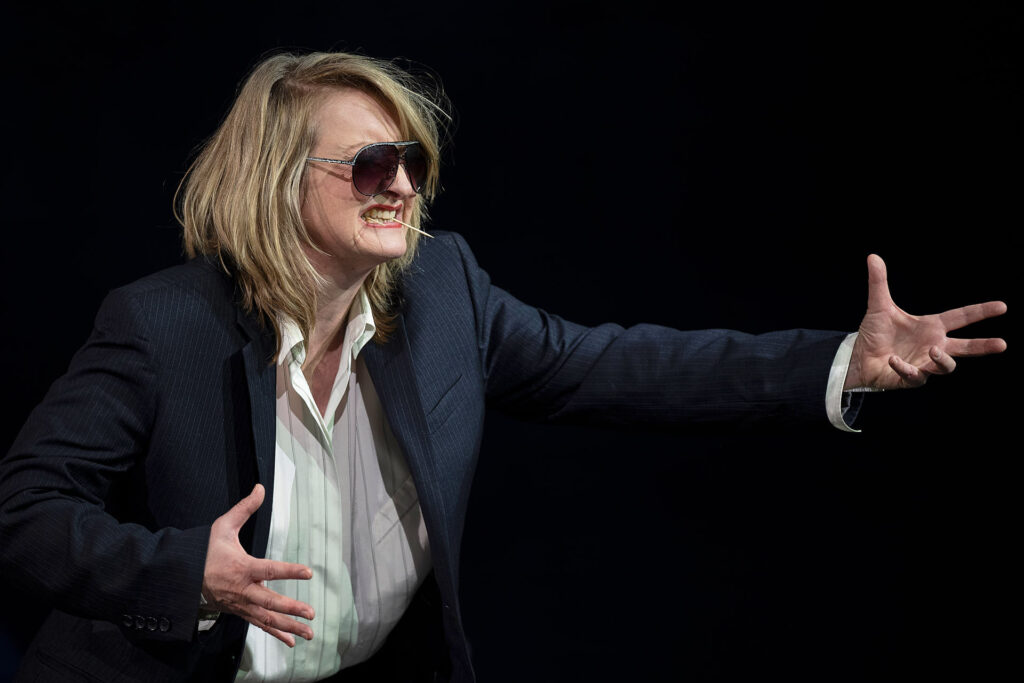
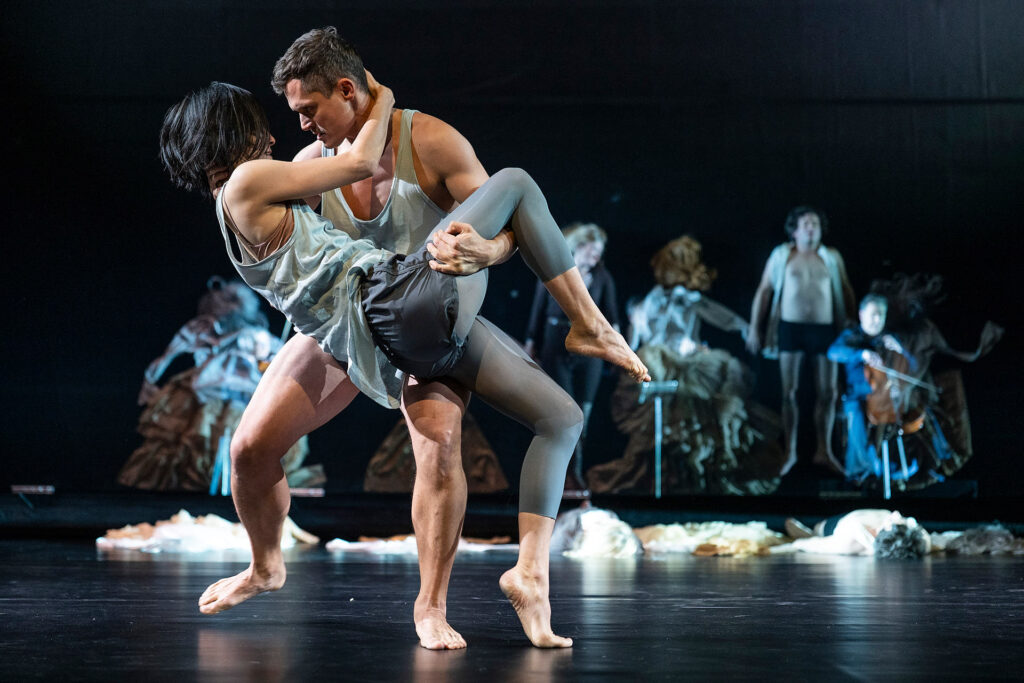
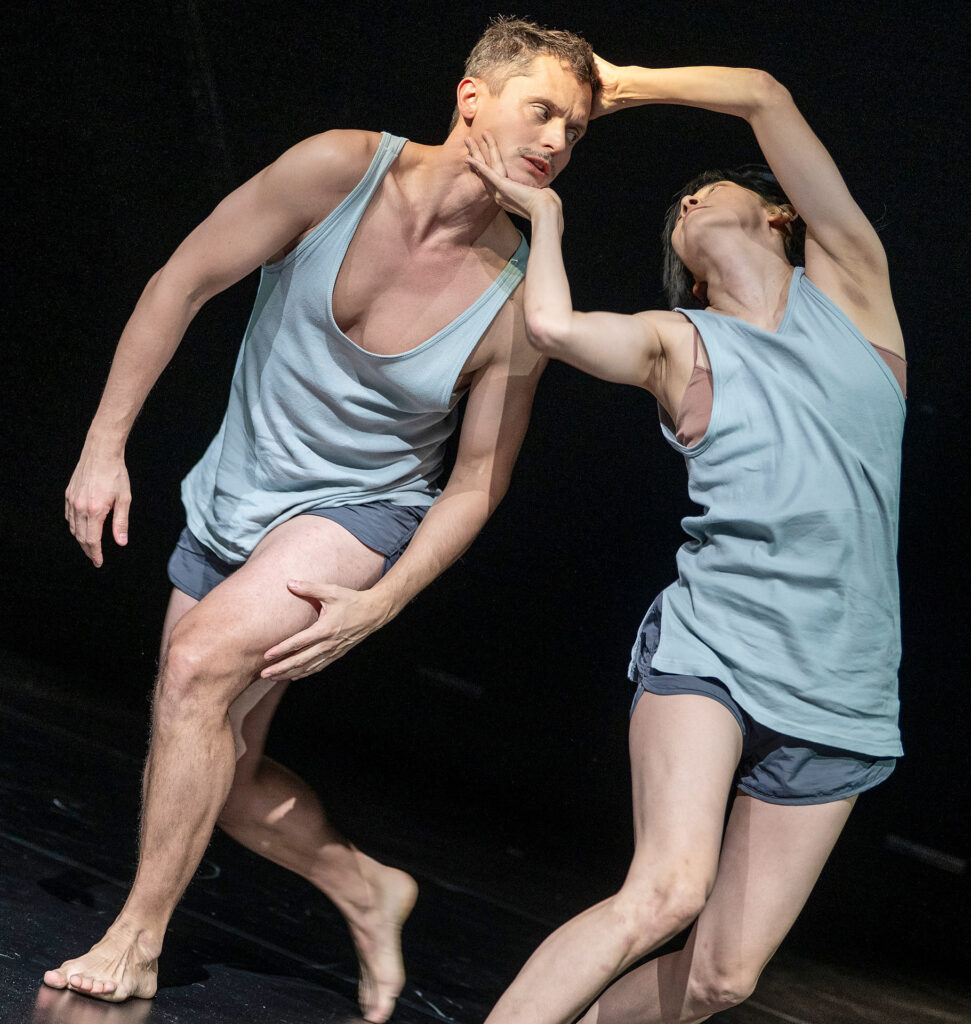
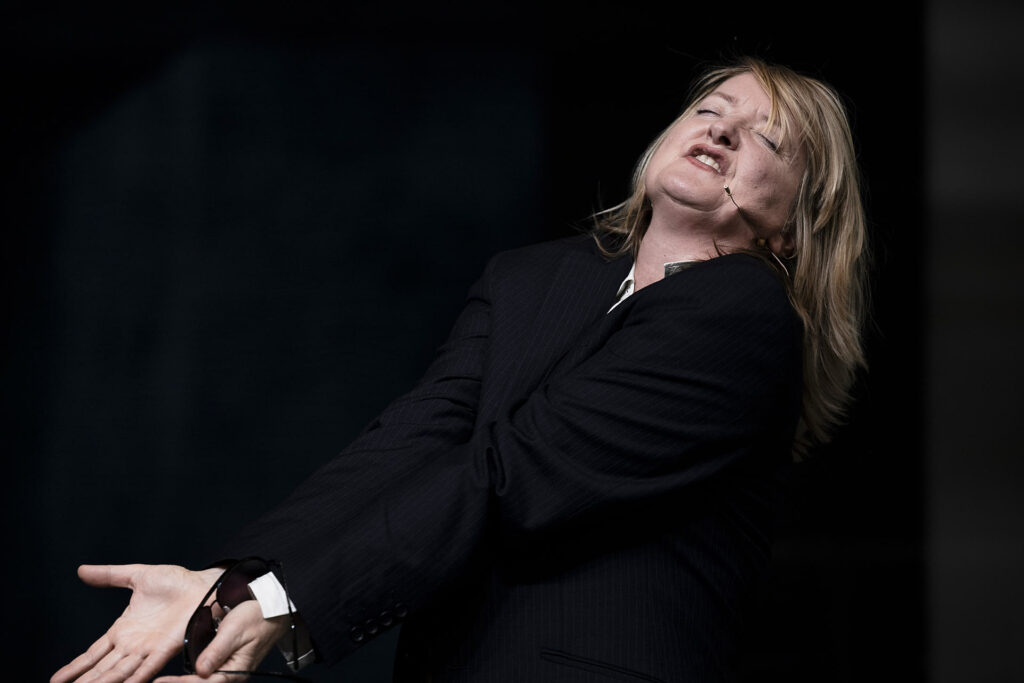
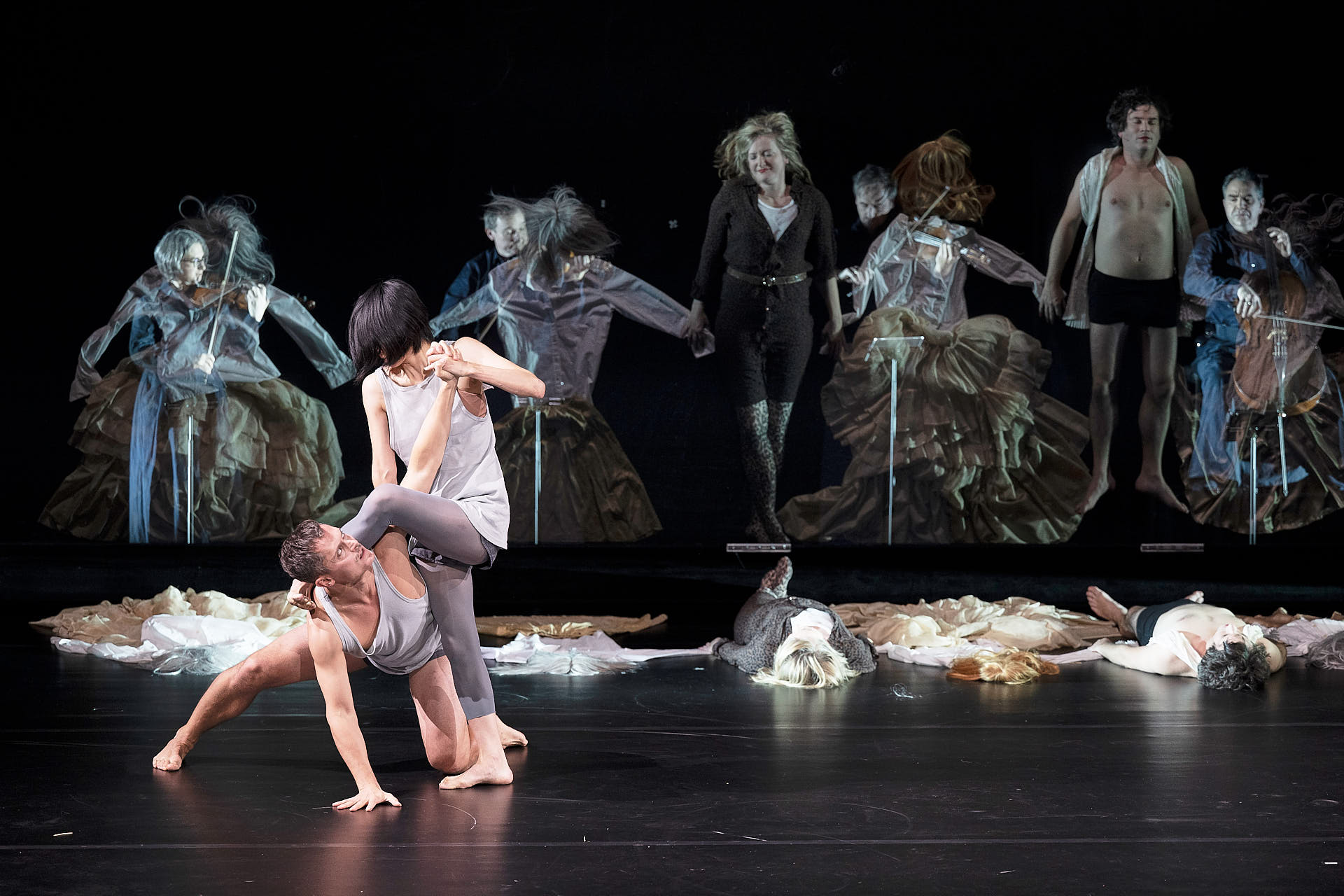
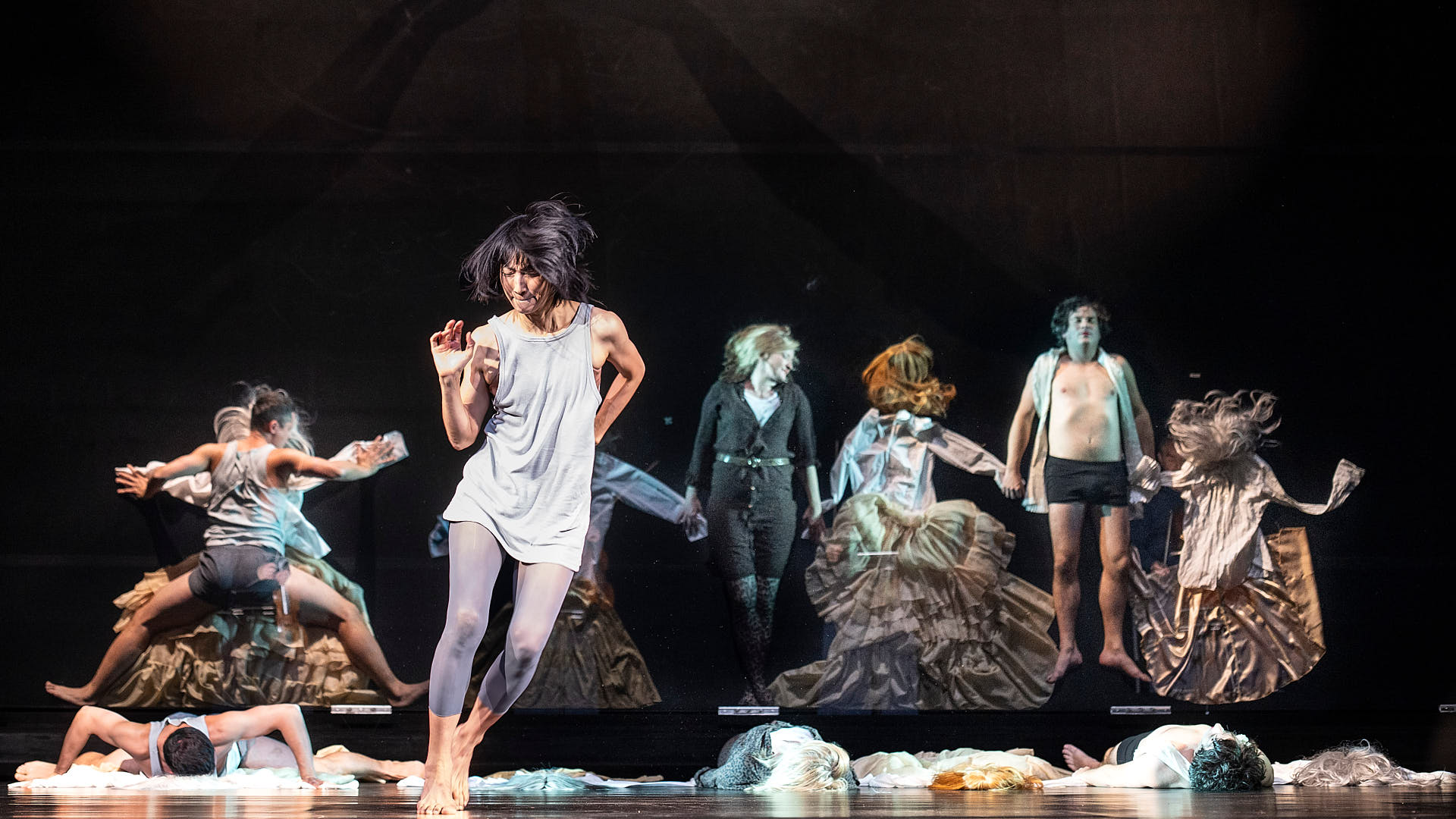
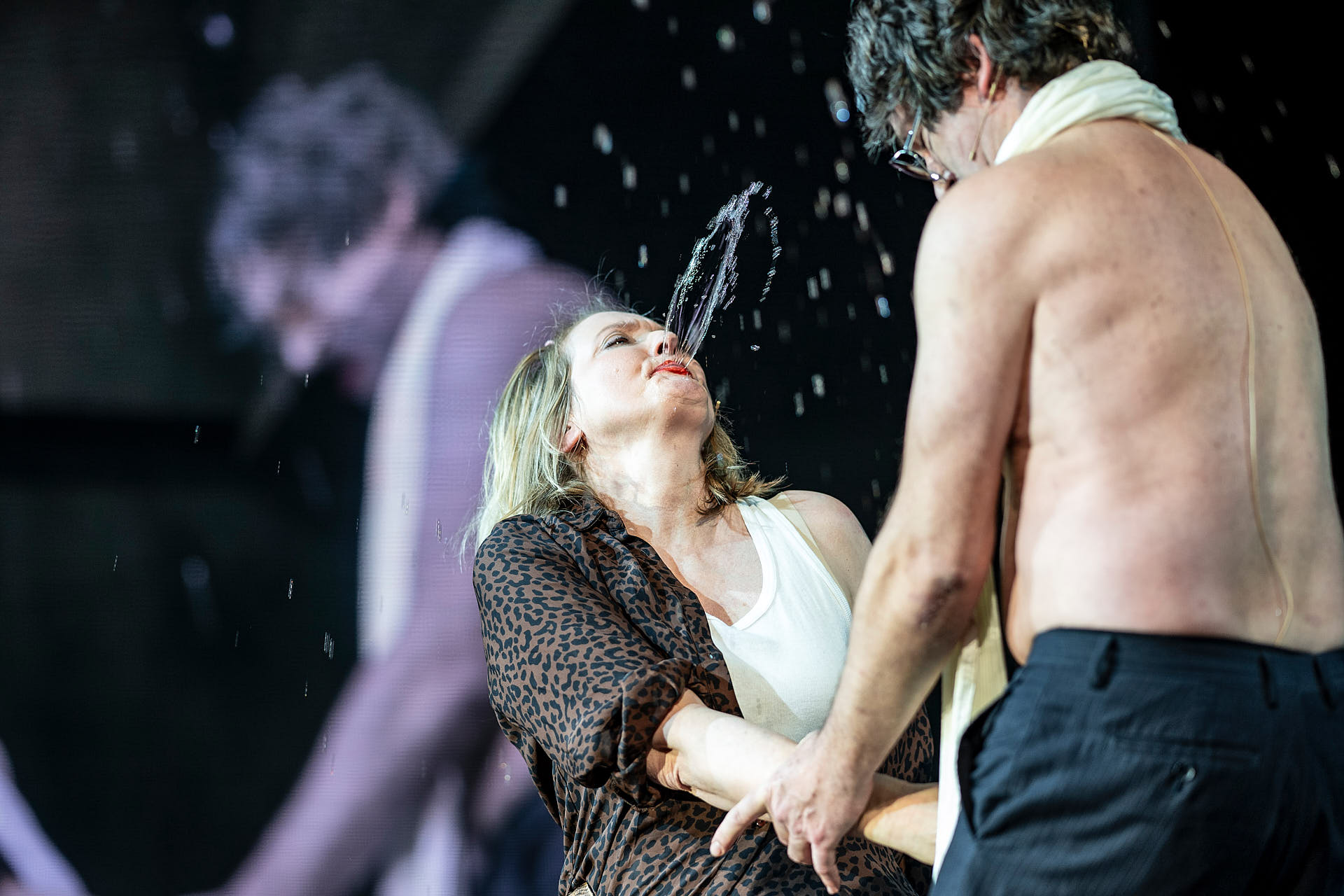
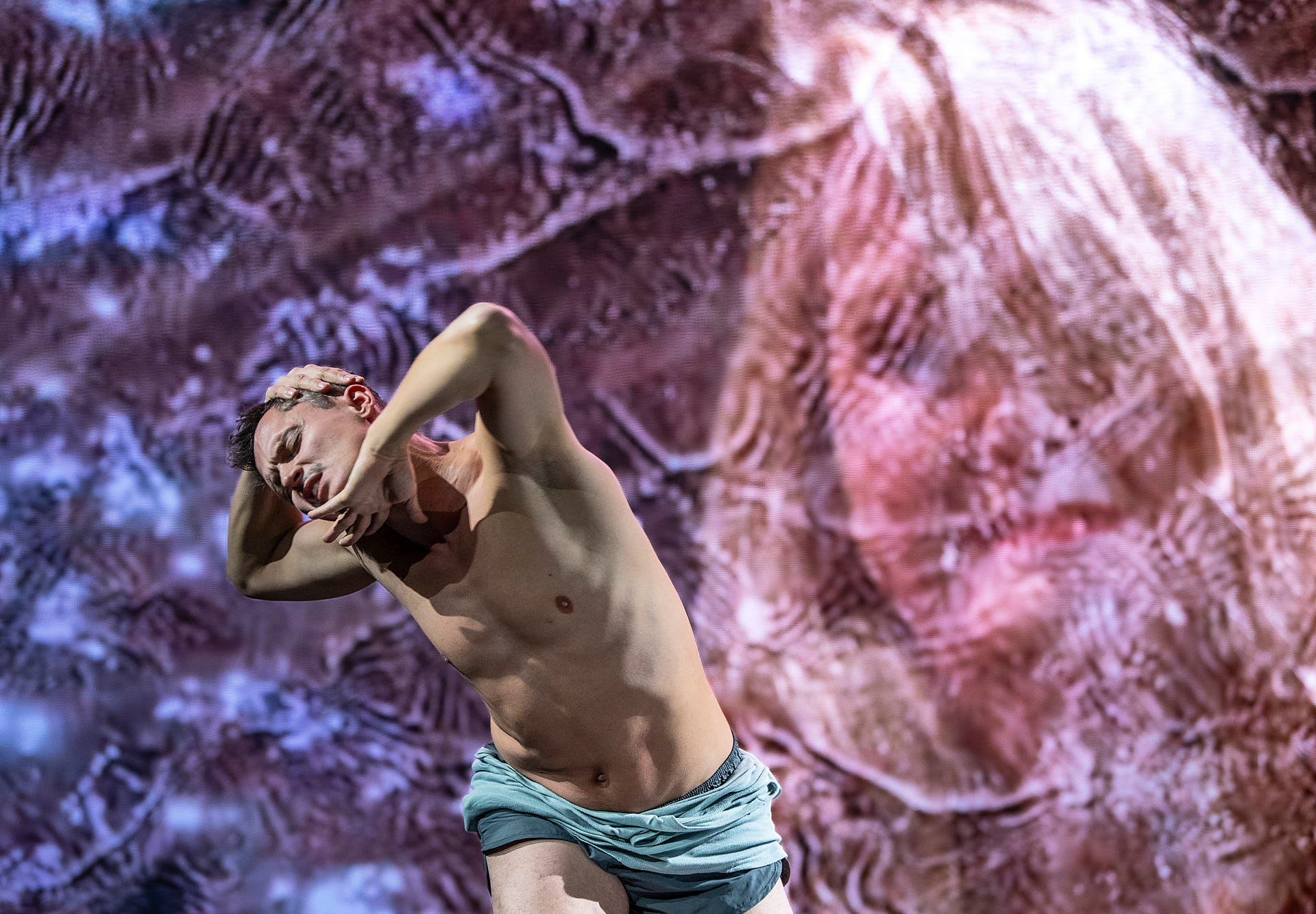
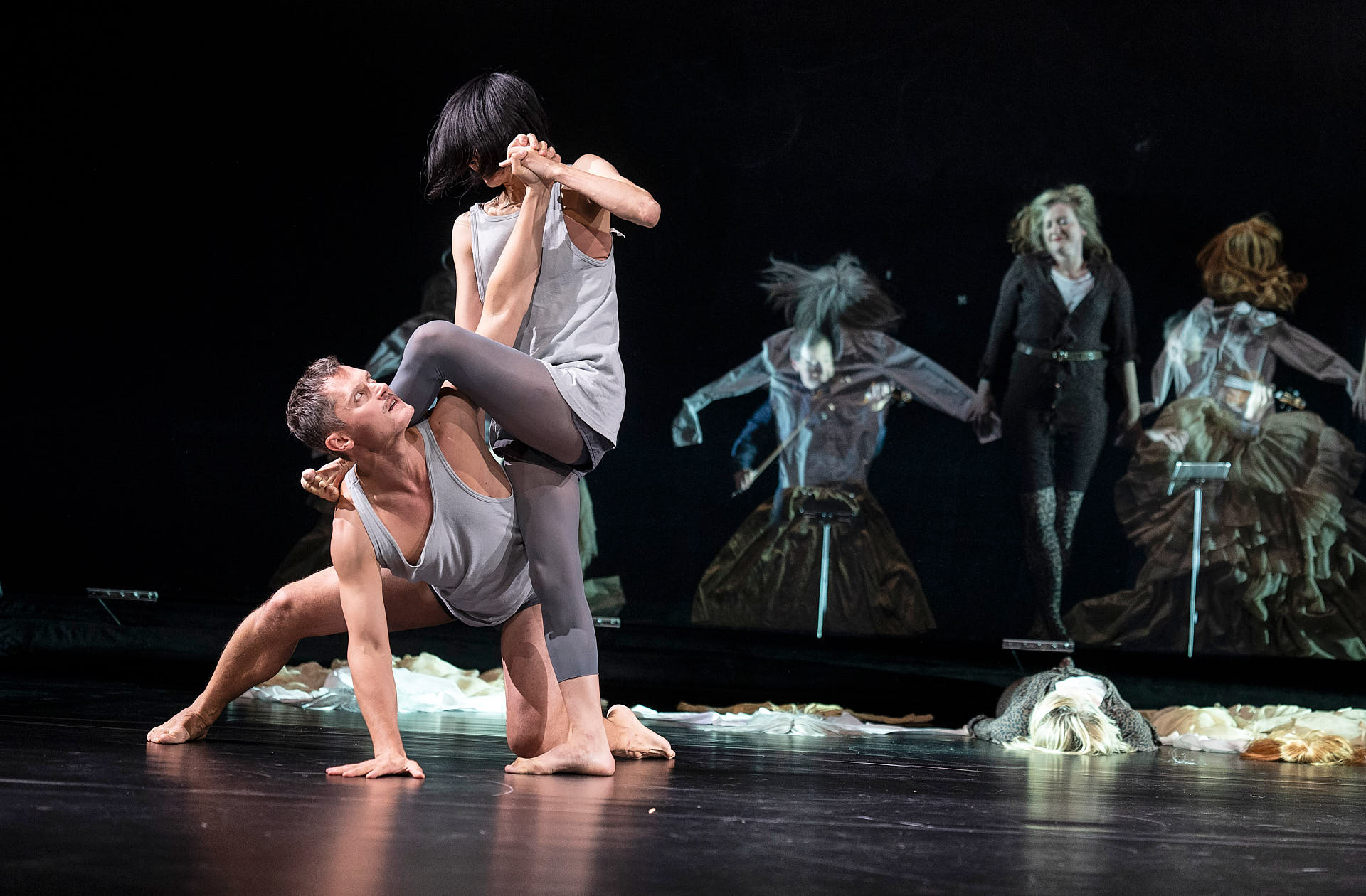
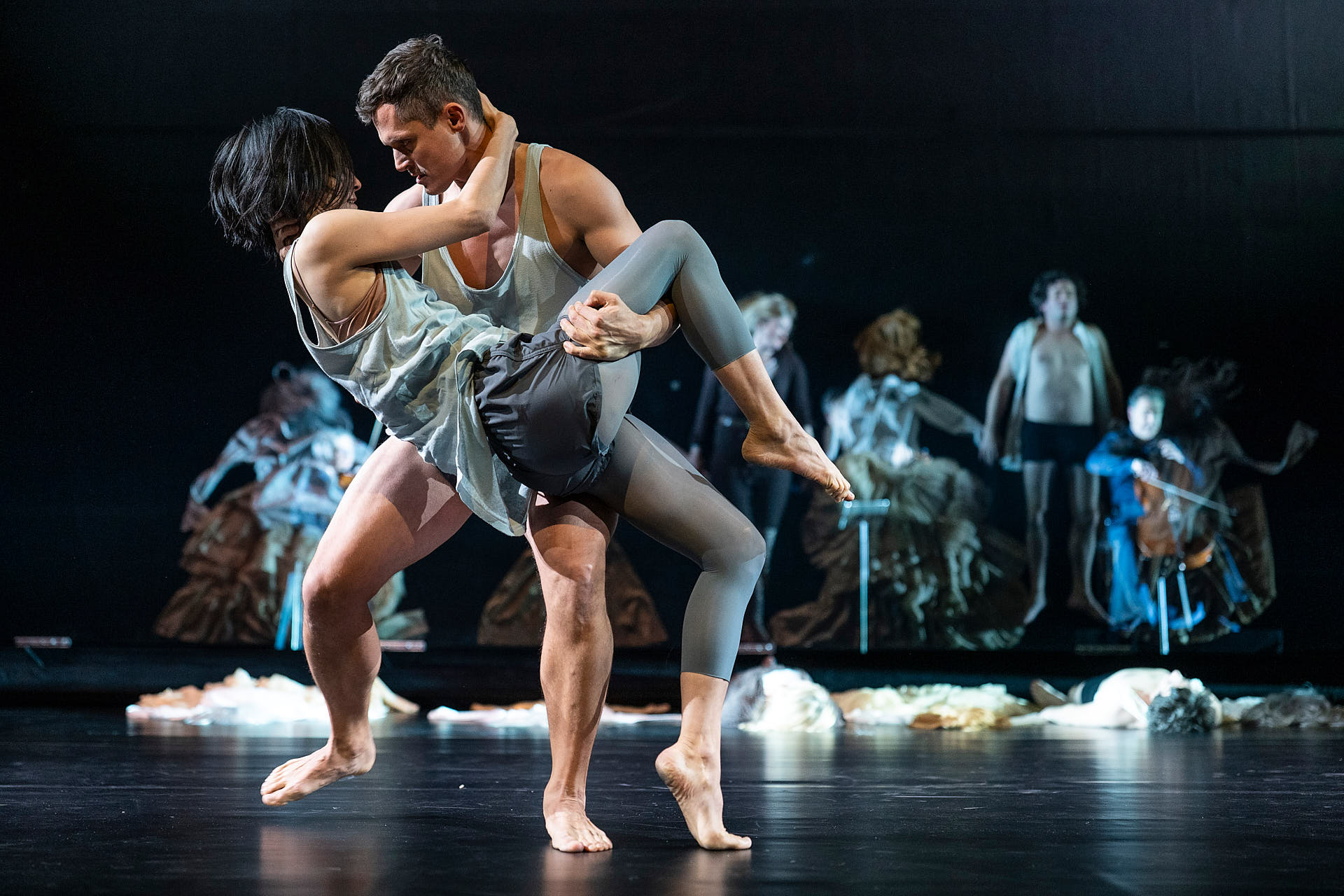
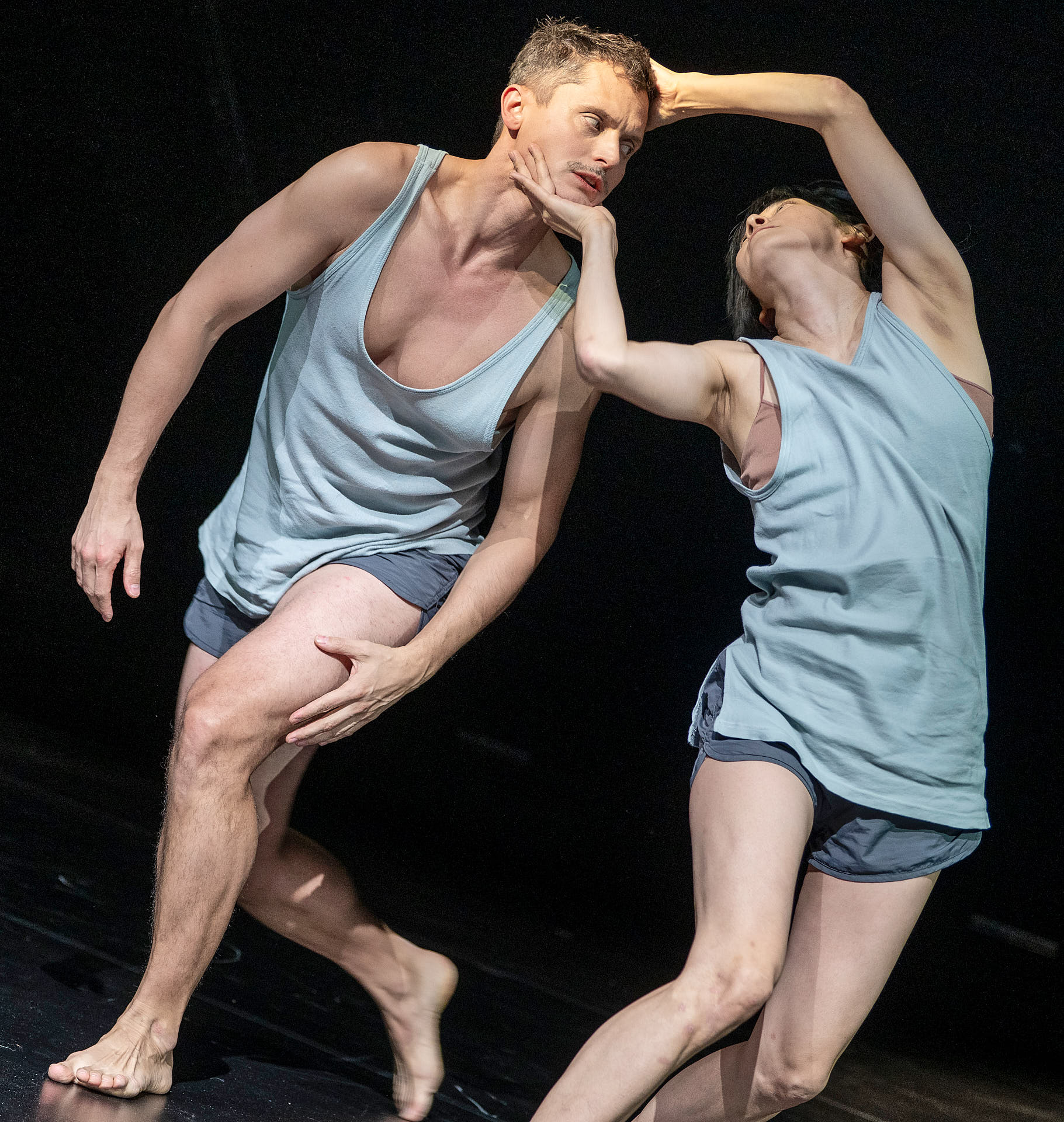
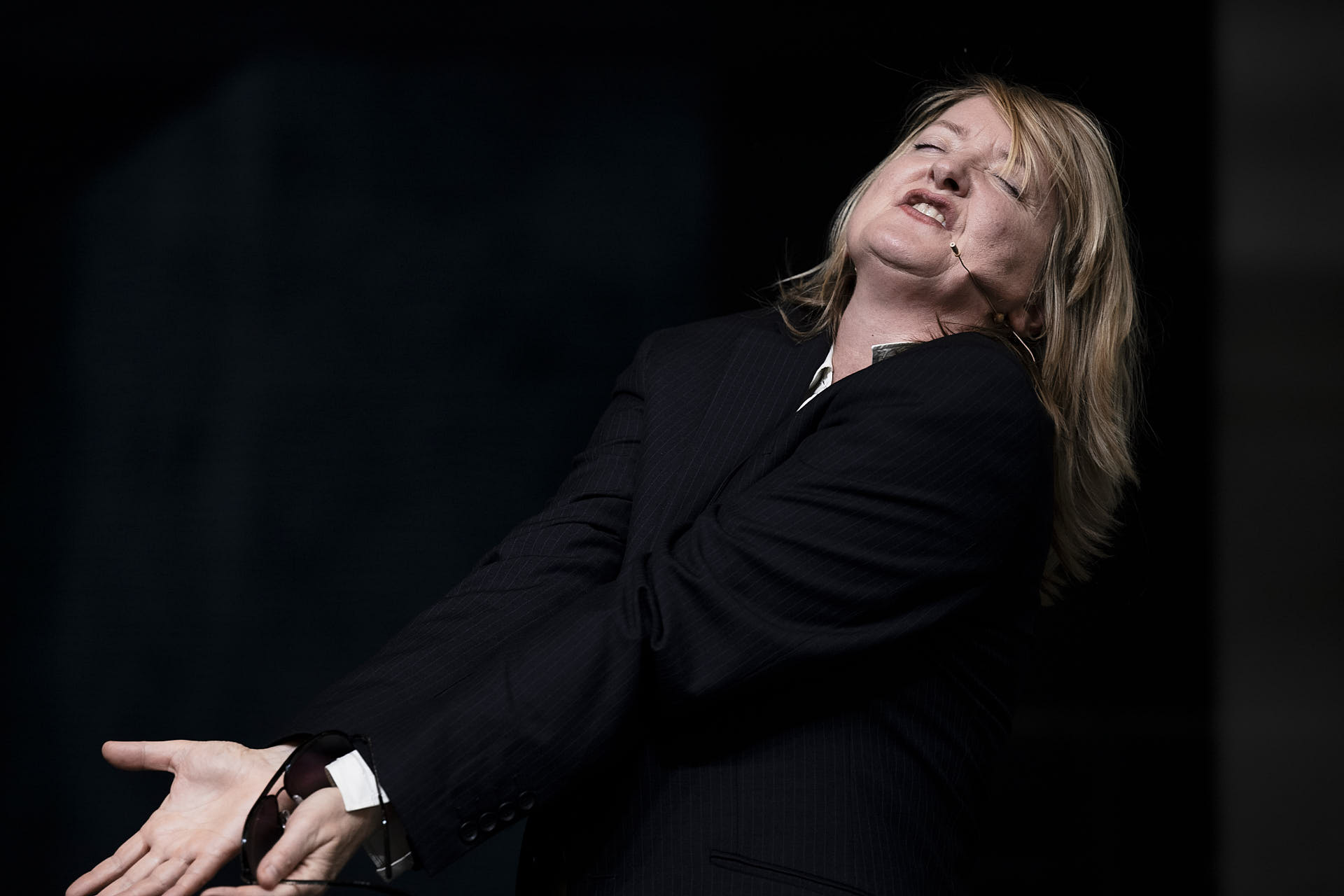
The Berlin-based independent music theatre ensemble Nico and the Navigators takes on this demanding material, interweaving it with both of Leoš Janáček’s string quartets. Their eruptive, nervously flickering musical language does not function as illustrative accompaniment, but as a contrapuntal echo of the text. On stage, two pairs encounter one another in a dialogue of word and body: actors Annedore Kleist and Martin Clausen, alongside the dance duo Yui Kawaguchi and Martin Buczko. Kleist shapes inner fractures — between superiority and vulnerability — through richly varied facial expression, while Clausen counters existential gravity with comic precision. Kawaguchi articulates the work’s emotional undercurrents through highly virtuosic, sharply contoured movement, complemented by Buczko’s insistent physicality.
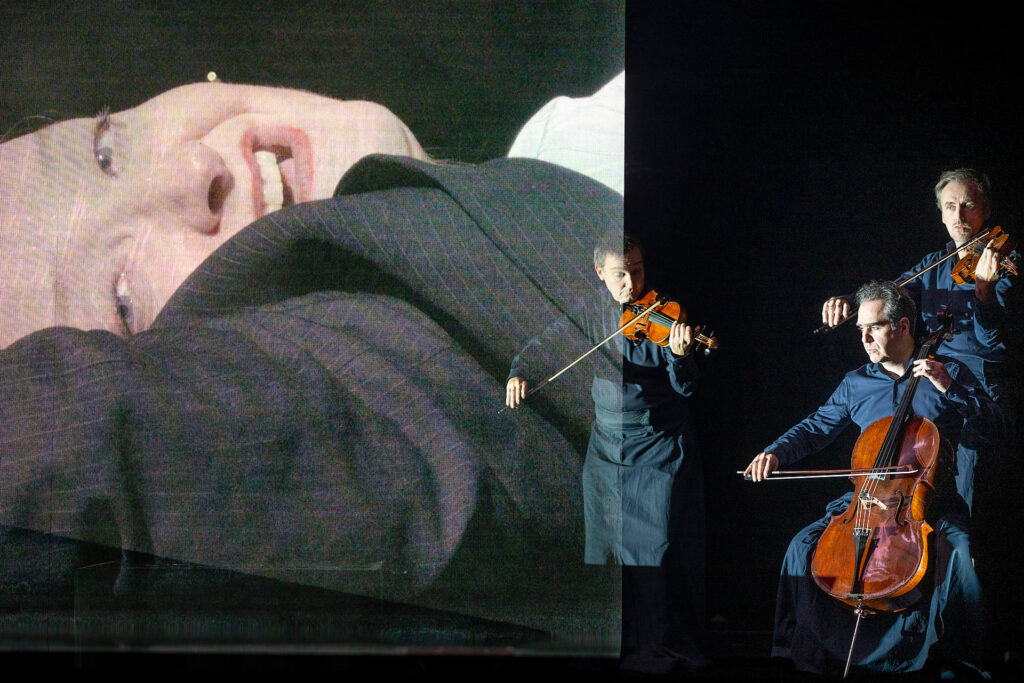
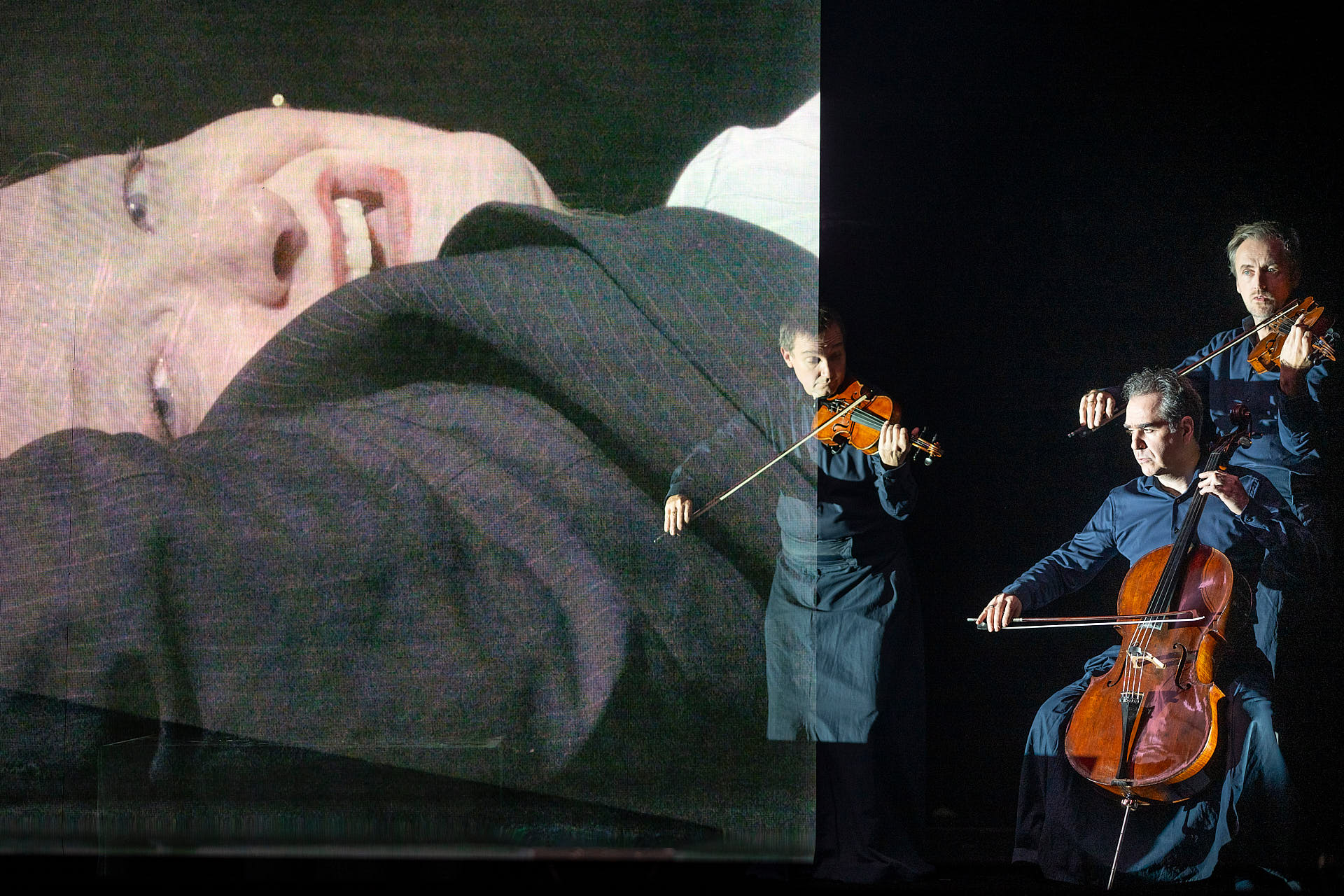
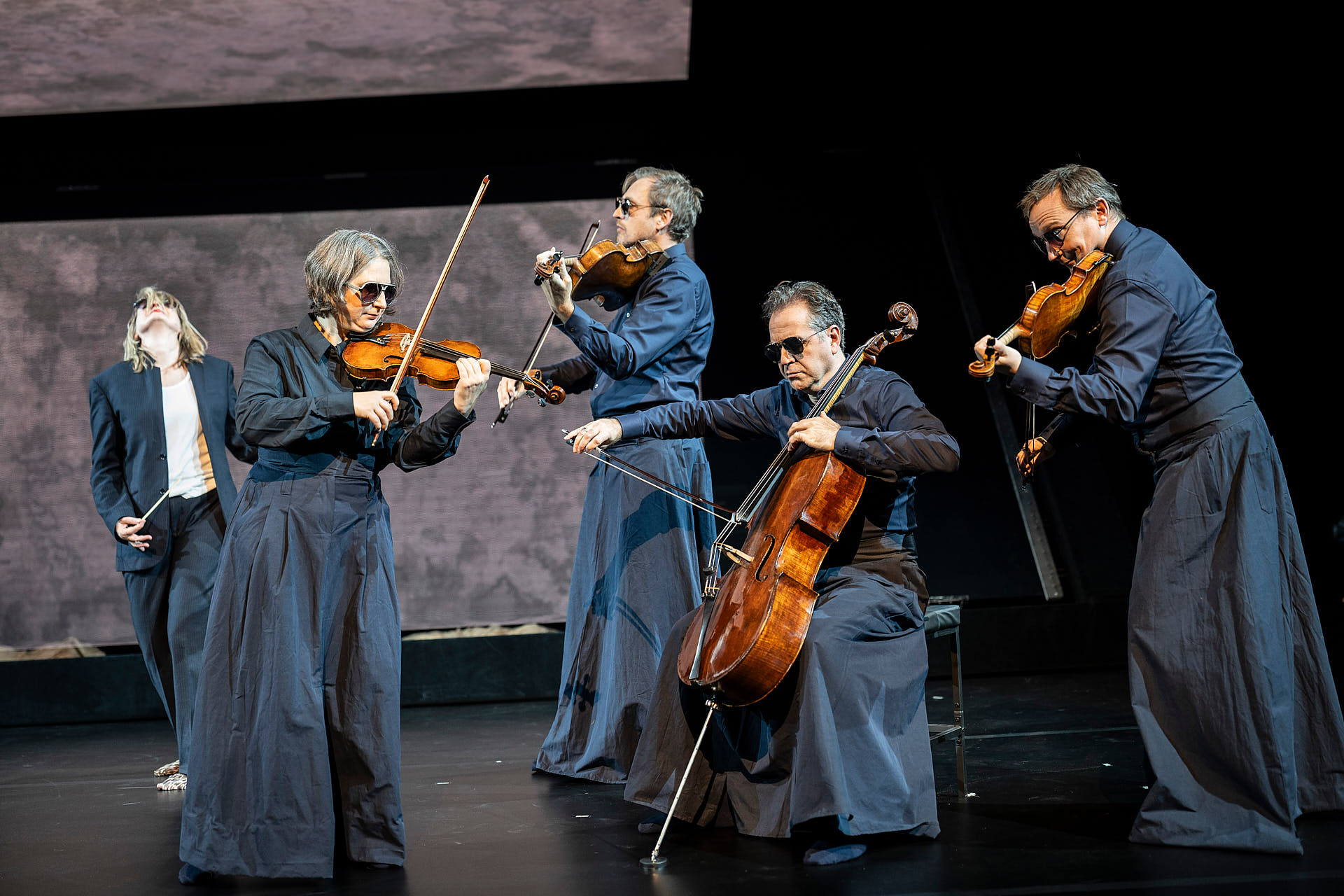
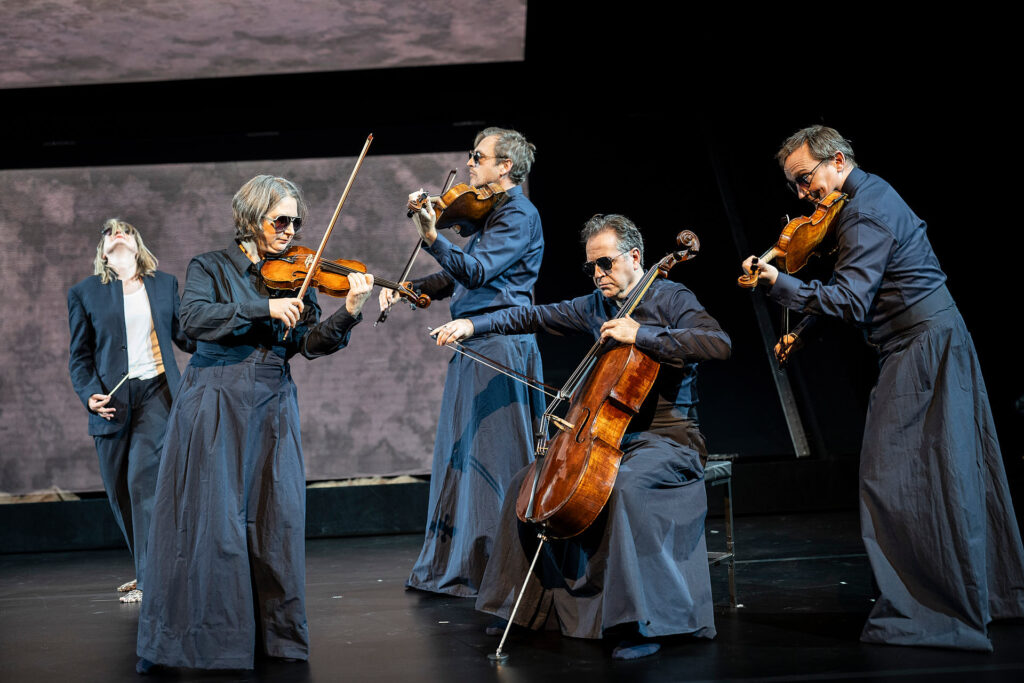
Musically, a broadly conceived acoustic space emerges. Paul Hübner (trumpet, electronics) and Lorenzo Riessler (percussion) combine electronic soundscapes with signal motifs and driving rhythmic patterns. Particularly in the dance sequences, this creates a pulsating dialogue between stage and music that never slips into mere effect, remaining firmly committed to the piece’s inner tension. The Kuss Quartet, interpreting Janáček’s highly expressive music with assurance, also joins the action, at times becoming part of the stage event itself.
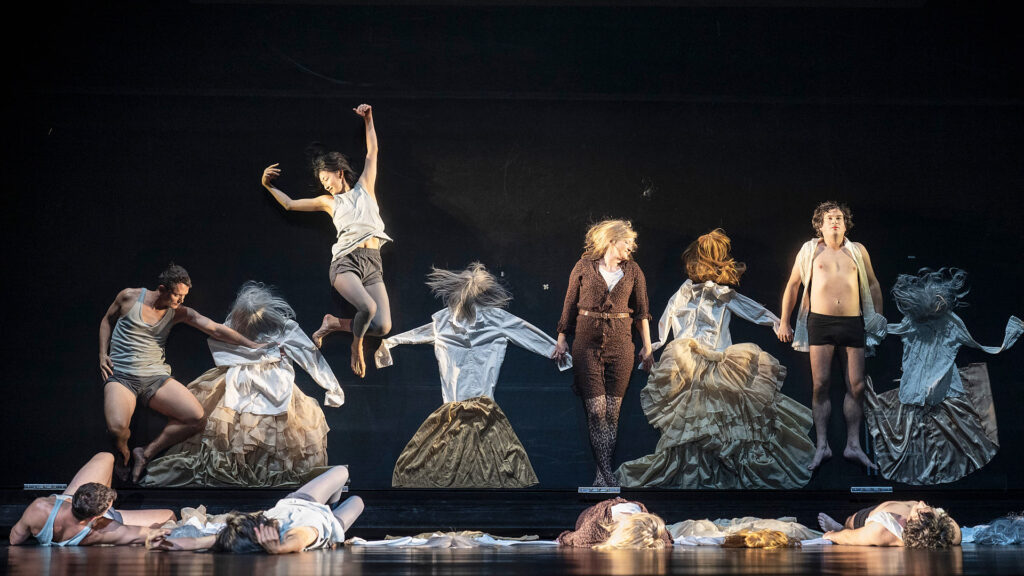
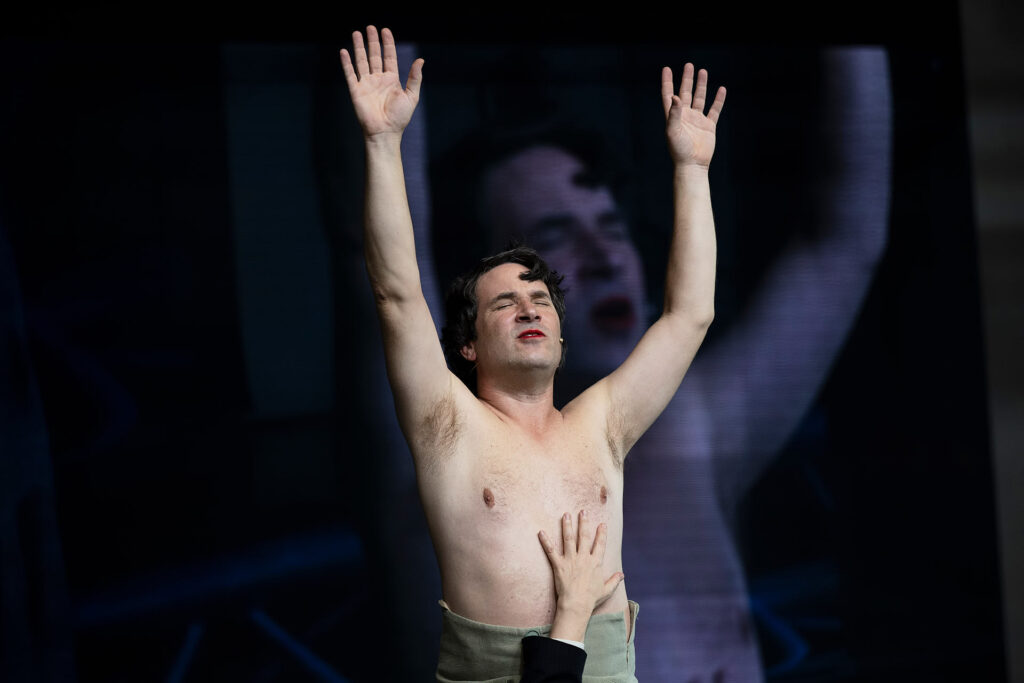
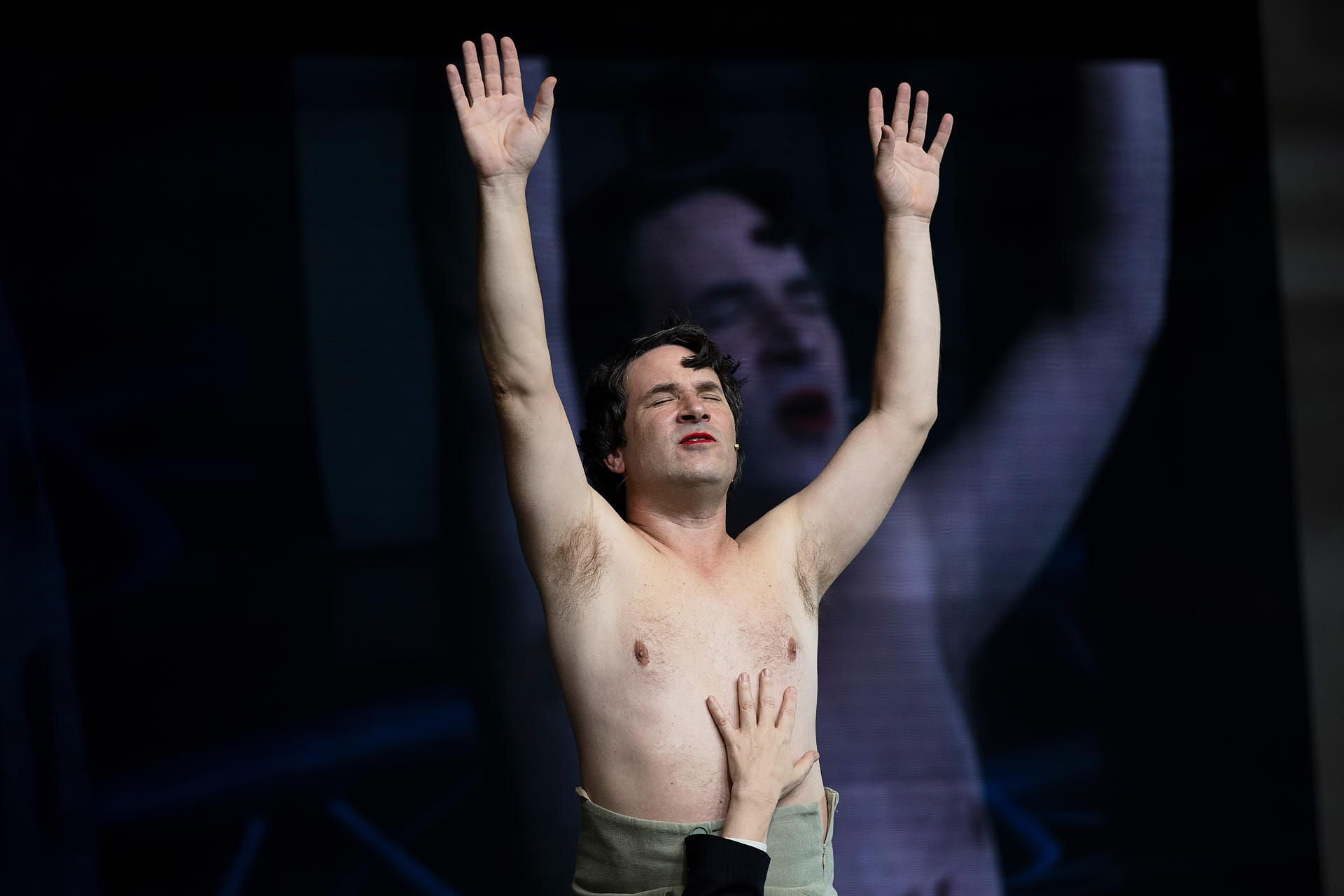
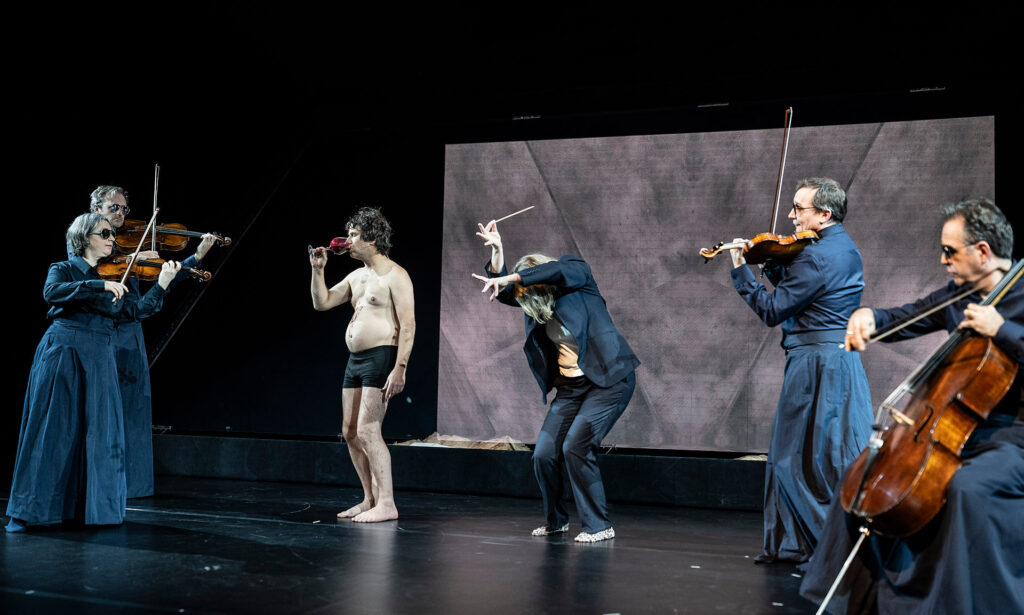
Nicola Hümpel is responsible for direction, concept, and costumes. She programmatically takes up Müller’s gender reversals: men in dresses — not only within the dance duo but also among the string players — mirror the text’s shifts of identity. The decision is neither garish nor provocative, but integrates seamlessly into the play with masks and reflections.
A stylistic rupture does occur, however, when Clausen, in Valmont’s death scene, slips into casual colloquial German; here, the production unnecessarily departs from Müller’s elaborately crafted language.
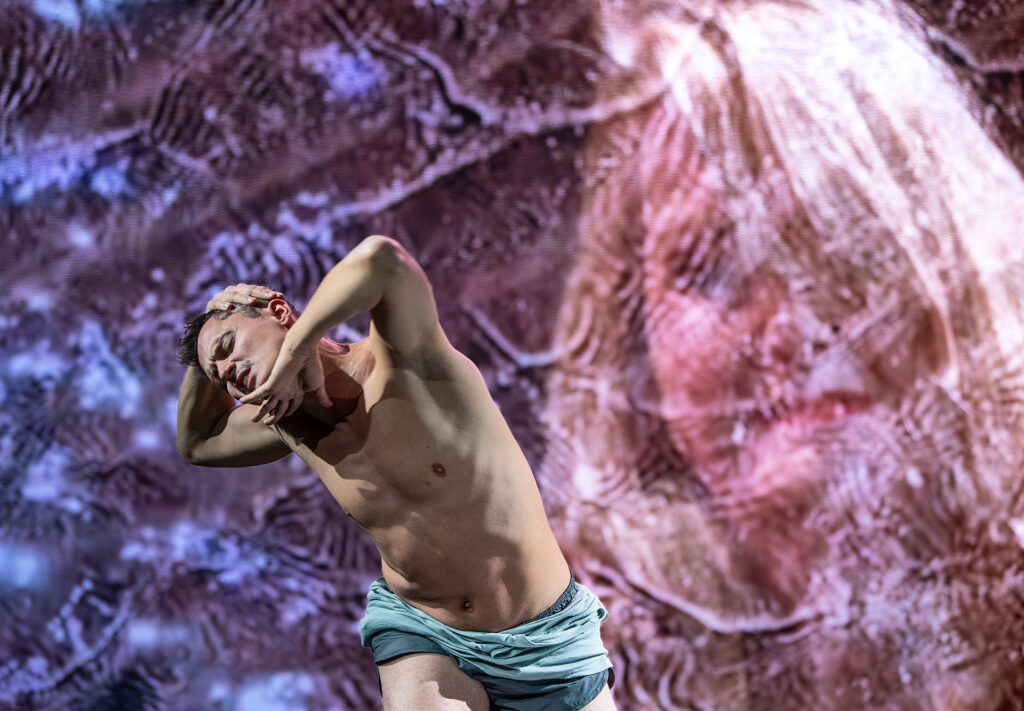
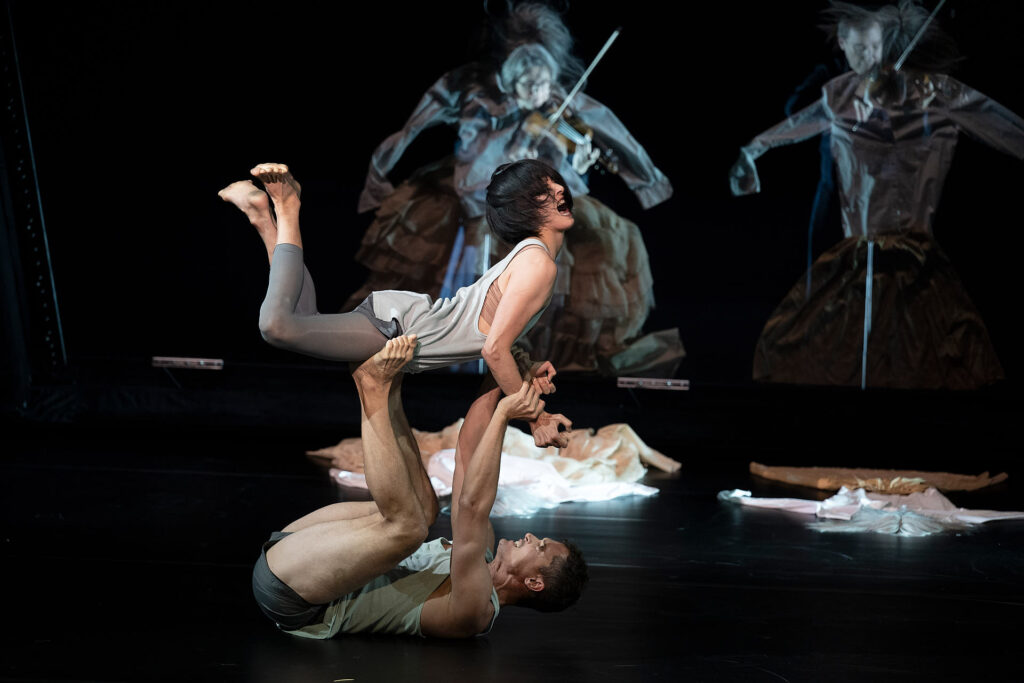
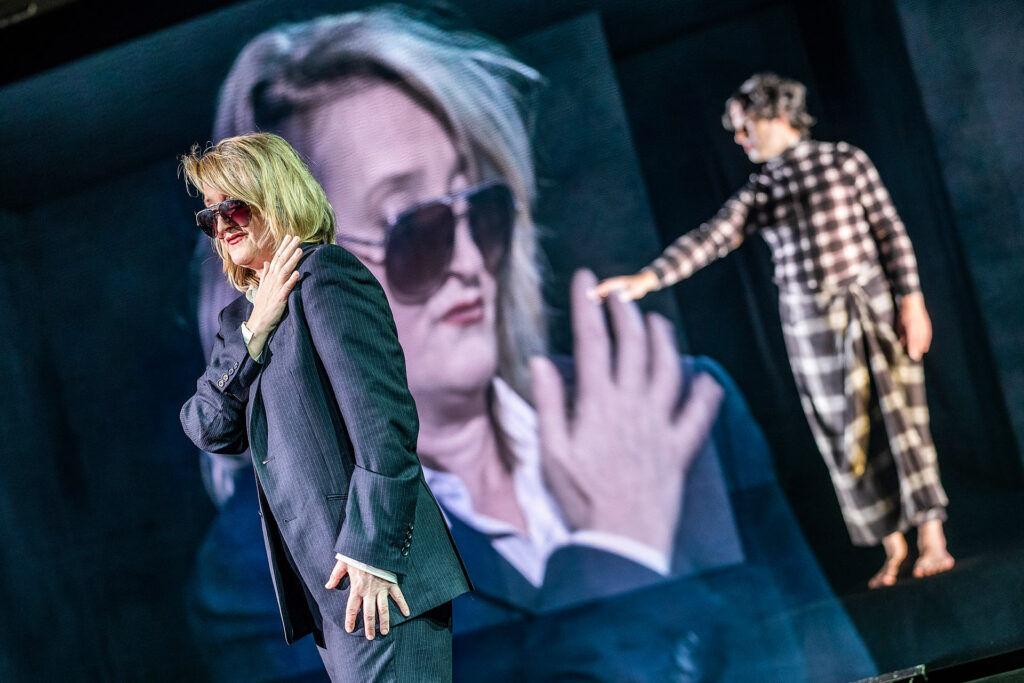
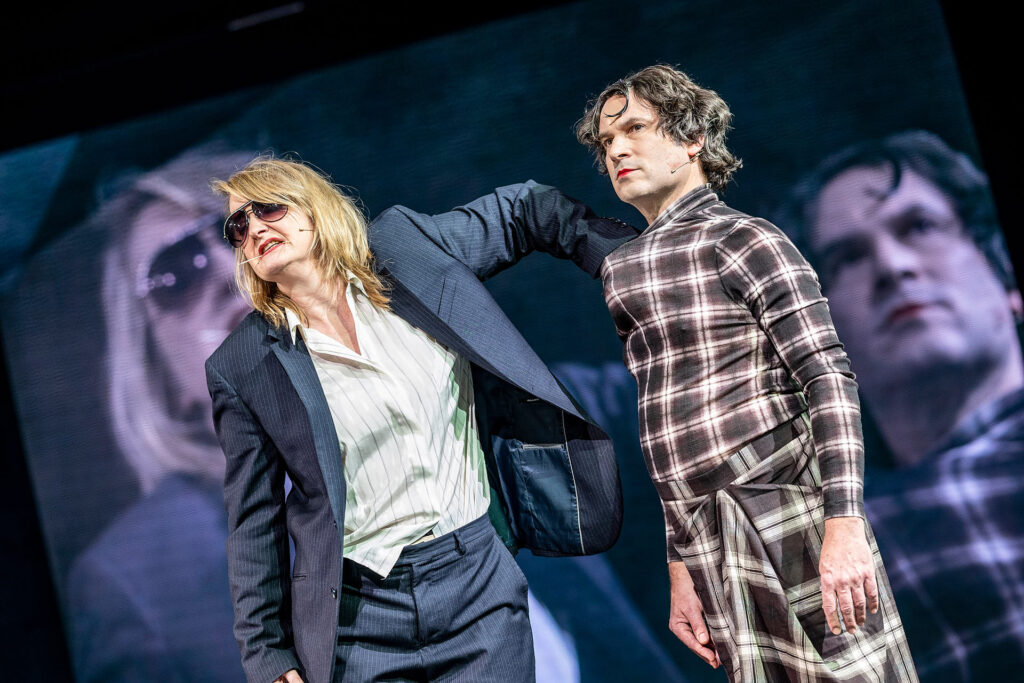
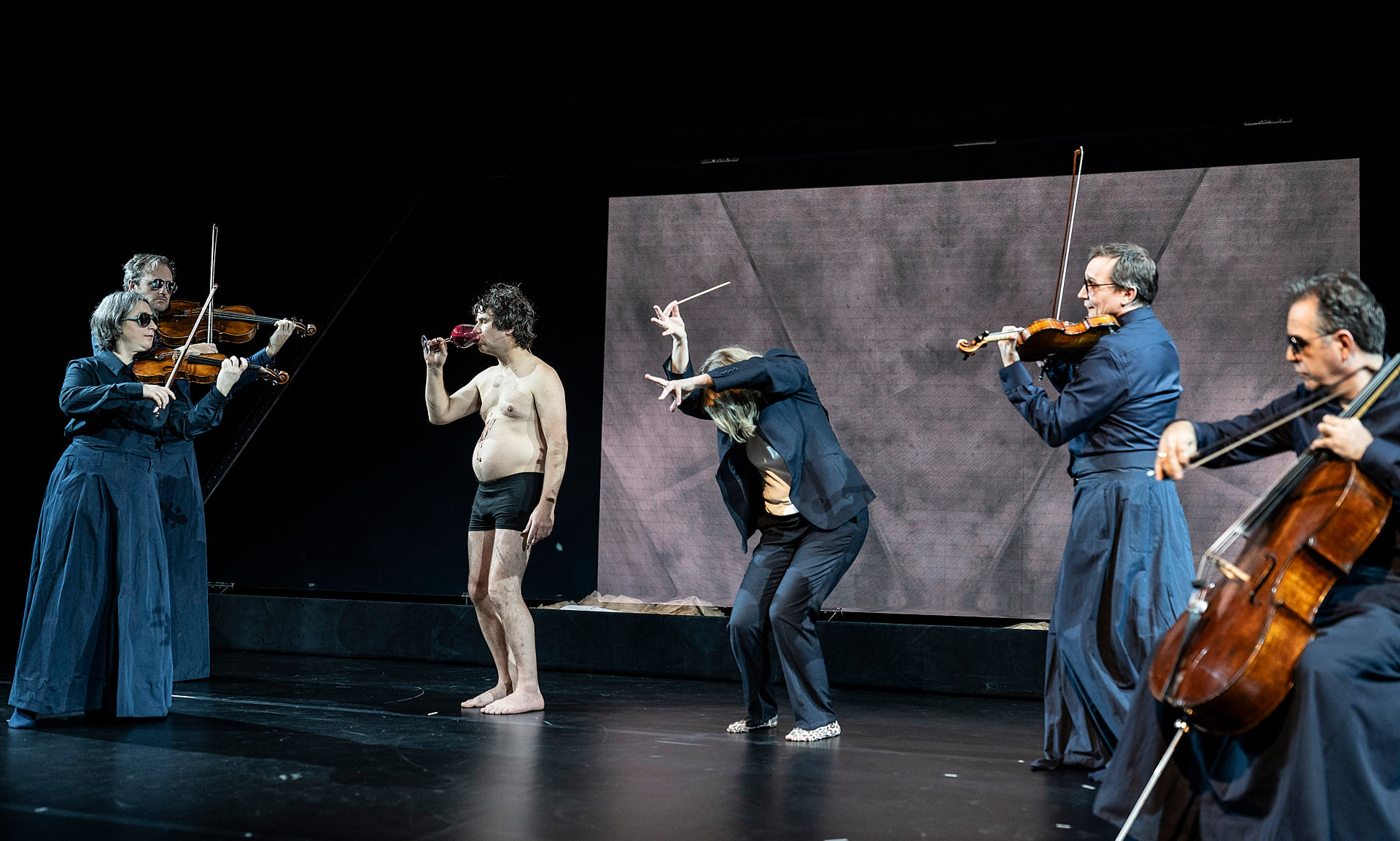
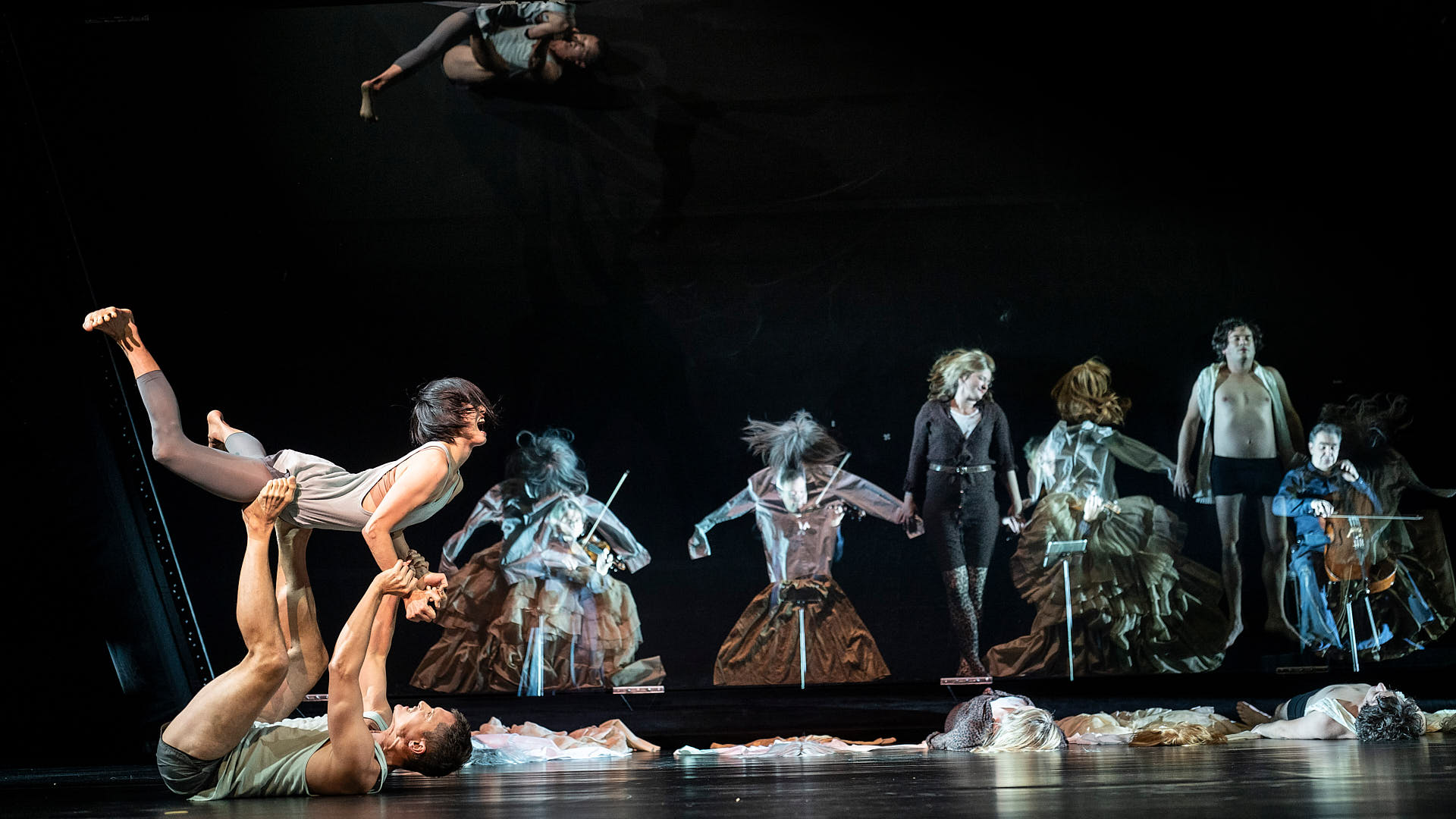
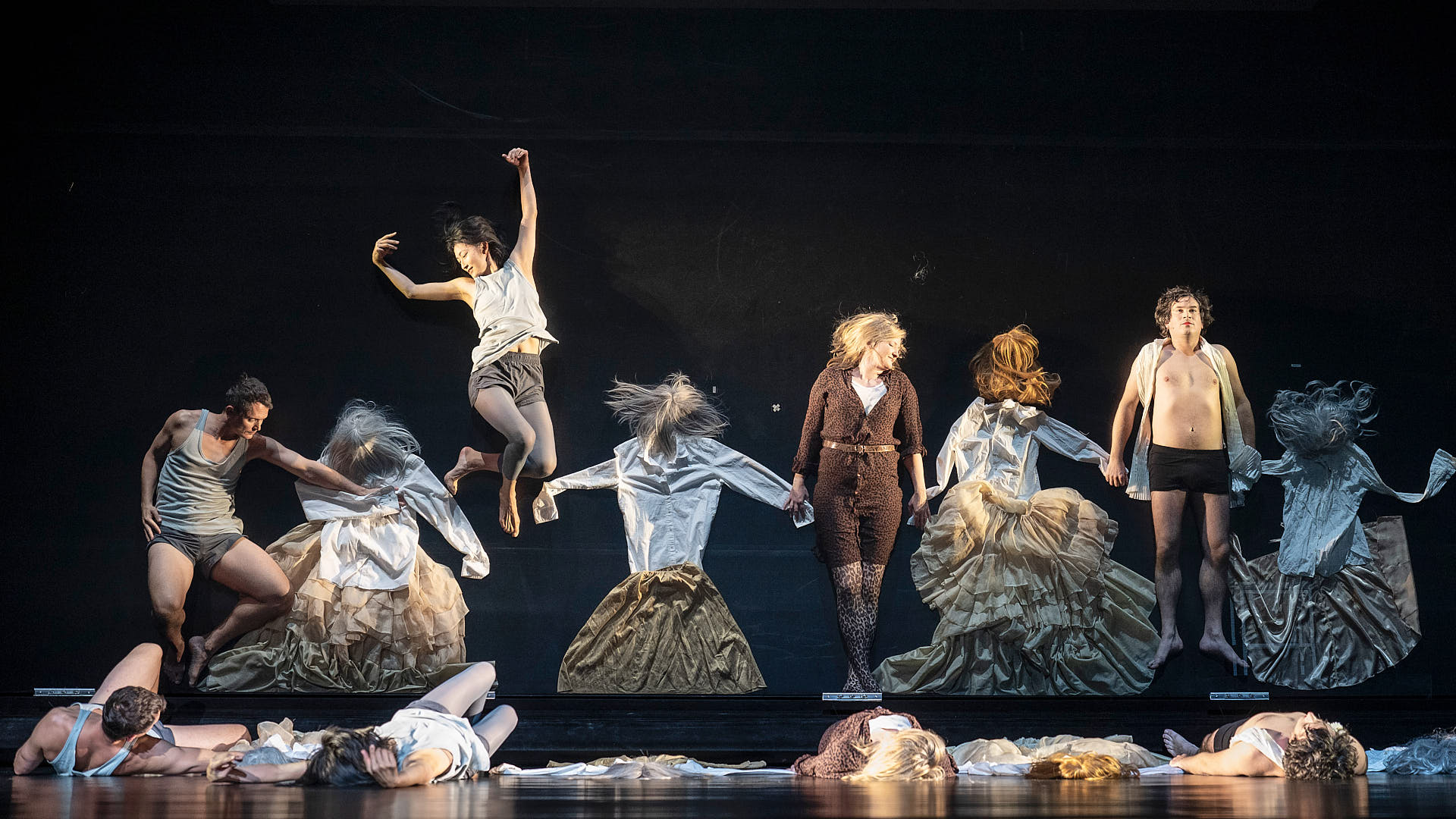
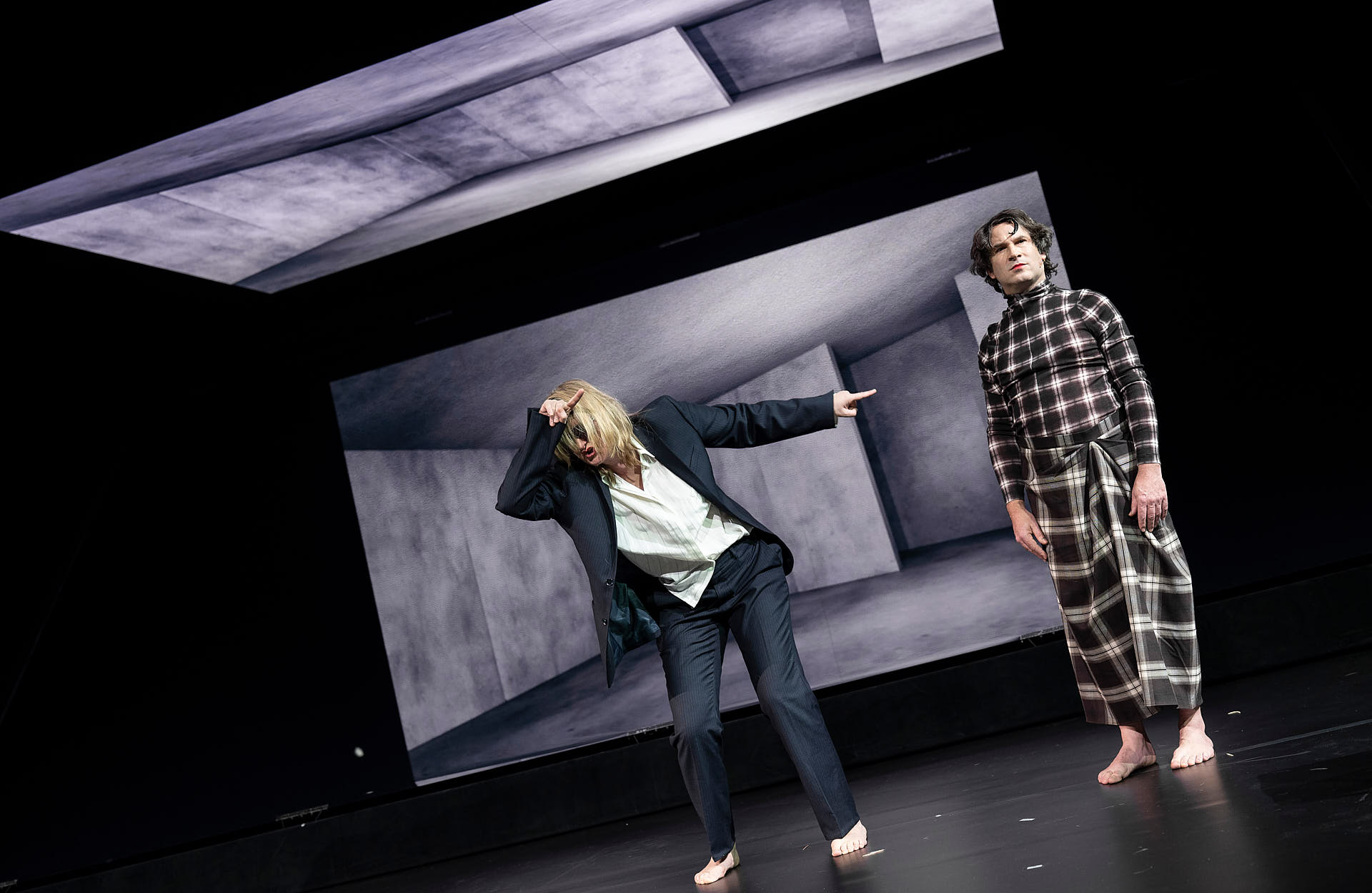
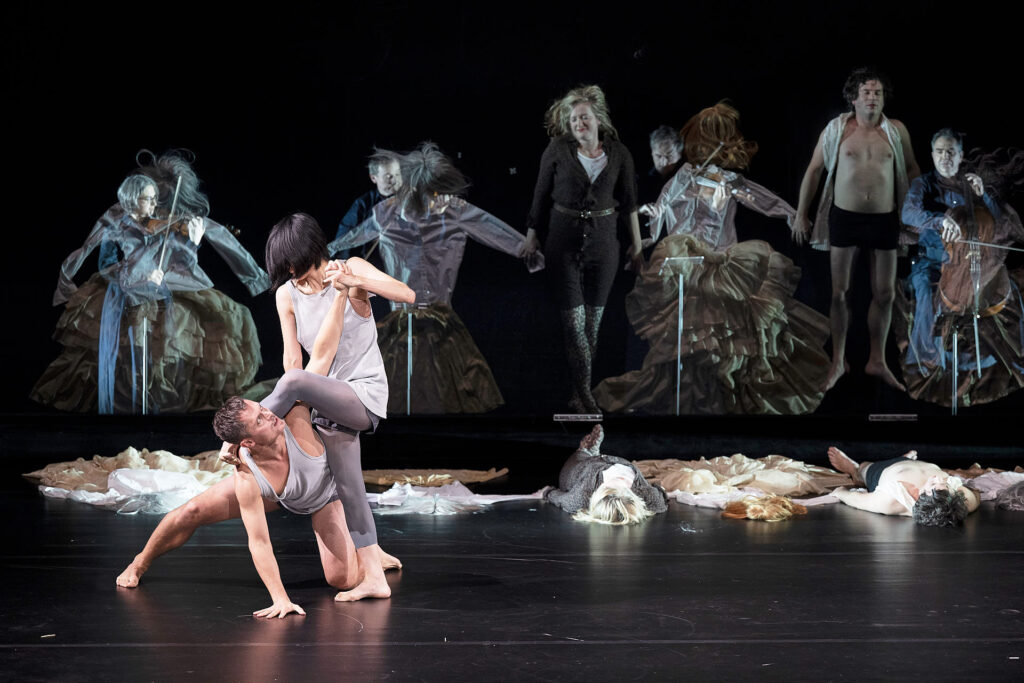
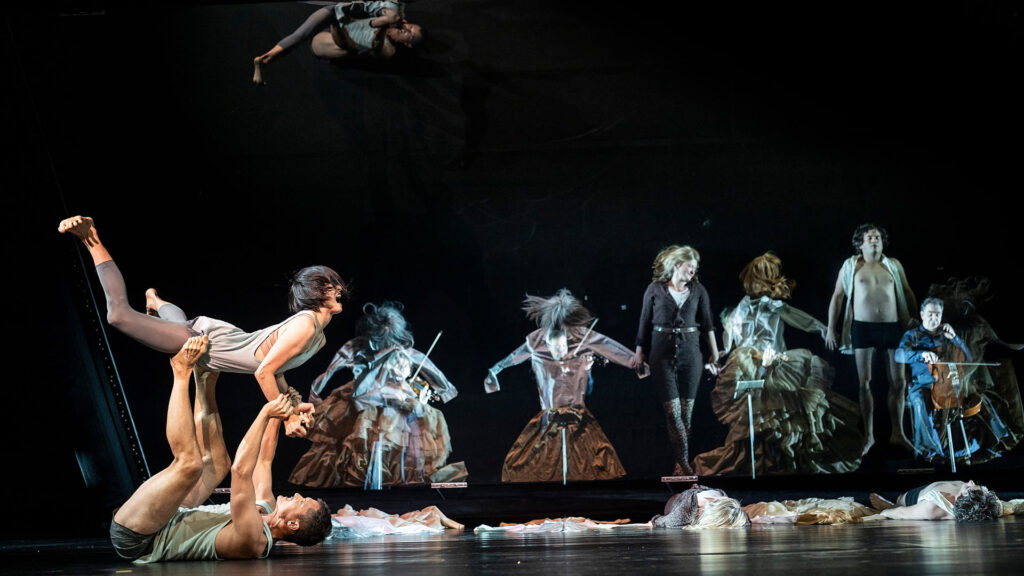
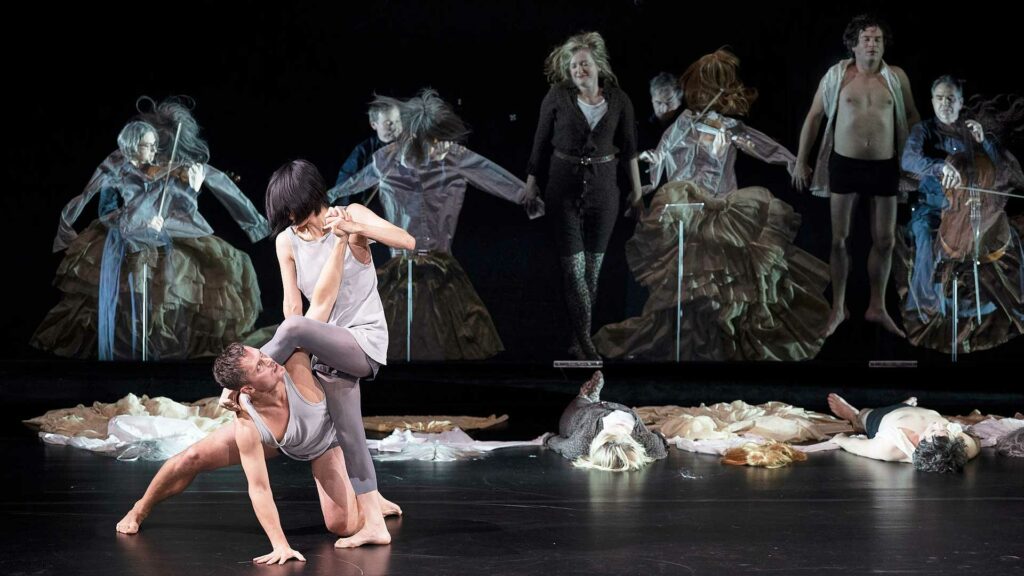
By contrast, Oliver Proske’s stage design stands out positively. Composed of semi-transparent, angled mirror surfaces and precisely integrated video elements, it creates a visual echo of the doublings already inherent in the text: bodies appear real, mirrored, and estranged.
In a sold-out Radialsystem, this intense and multilayered performance rightly concluded with enthusiastic applause. The premiere discussed here took place on 4 December 2025 at Radialsystem, followed by further performances on 5, 6, and 7 December.
It is a pleasure to watch Martin Clausen and above all Annedore Kleist in the roles of the seasoned seduction monster Valmont and his embittered accomplice Merteuil. […] The string quartet, dressed in cassocks, drops in passages from Leoš Janáček’s quartets Kreutzer Sonata and Intimate Letters, which seem less to underscore the action than to comment on it in real time – nervous and feverish, yearningly post-Romantic, shimmering, cool or luxuriant. Nico and the Navigators want more. They complicate their Laclos–Müller adaptation with a tiltable glass set element onto which 2D and 3D image sequences are projected. It is sophisticated and offers plenty for the eye. Movements that the dance duo Yui Kawaguchi and Martin Buczko execute lying on the floor appear almost weightless in the tilting mirror: lying is flying. […] The performers on stage spare neither themselves nor their audience. The strength of the production lies in the fact that, despite everything, it never loses its playfulness and sardonic humour.
„Quartett", Heiner Müller’s distillation of Choderlos de Laclos’ "Dangerous Liaisons" – about the cynical power and erotic games of the corrupt court society in pre-revolutionary France – already pushes things to the limit of what is bearable. But Nico and the Navigators want more.
Why “squared”? Heiner Müller’s Quartett is already, in itself, about as much as one can endure: this distillate of Choderlos de Laclos’ Dangerous Liaisons, this cynical sexual campaign of annihilation stripped of the veiling elegance of Laclos’ epistolary novel. Nico and the Navigators top it at Berlin’s Radialsystem – or rather, they attempt the quadrature of this vicious game. Theatre to the power of dance to the power of music. It is too much.
Animalistic hunting instinct
It is a pleasure to watch Martin Clausen and above all Annedore Kleist in the roles of the seasoned seduction monster Valmont and his embittered accomplice Merteuil. One would dearly like to say that Heiner Müller’s play has aged badly in the 21st century – after #MeToo and Epstein, in view of the ongoing scandal that is Trump and the horror at the crimes committed against Gisèle Pelicot and far too many other women. But Valmont’s perfidy and Merteuil’s cynicism still hit the blackest of nerves – is what Valmont does really so very different from today’s grooming? – and Clausen and Kleist are simply very good in their shifting roles, with her being the better Valmont than he is a Madame Tourvel.
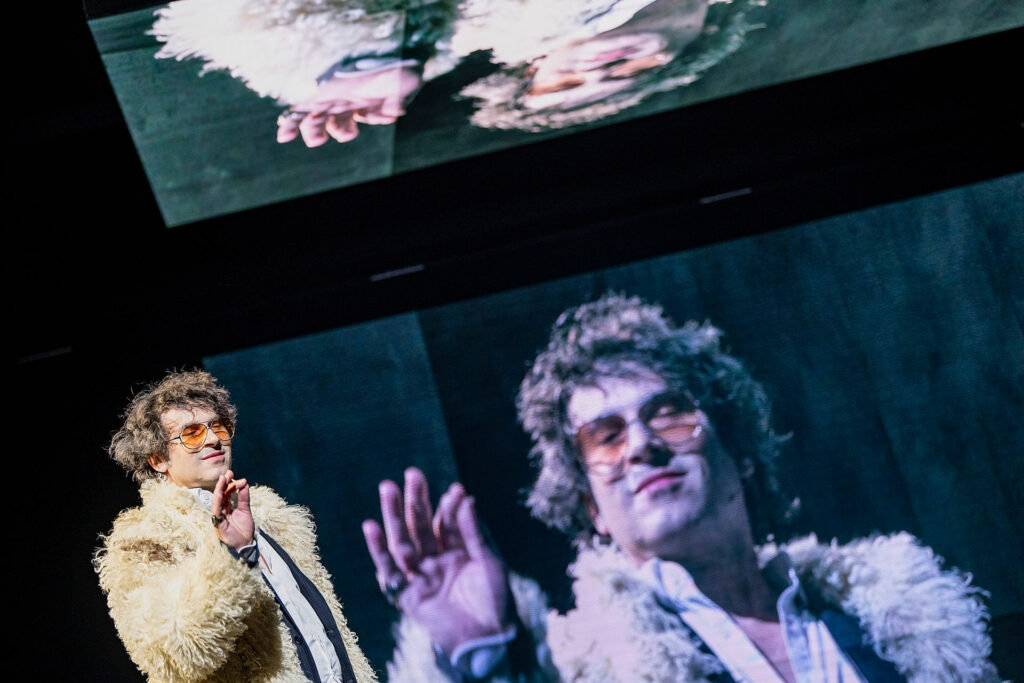
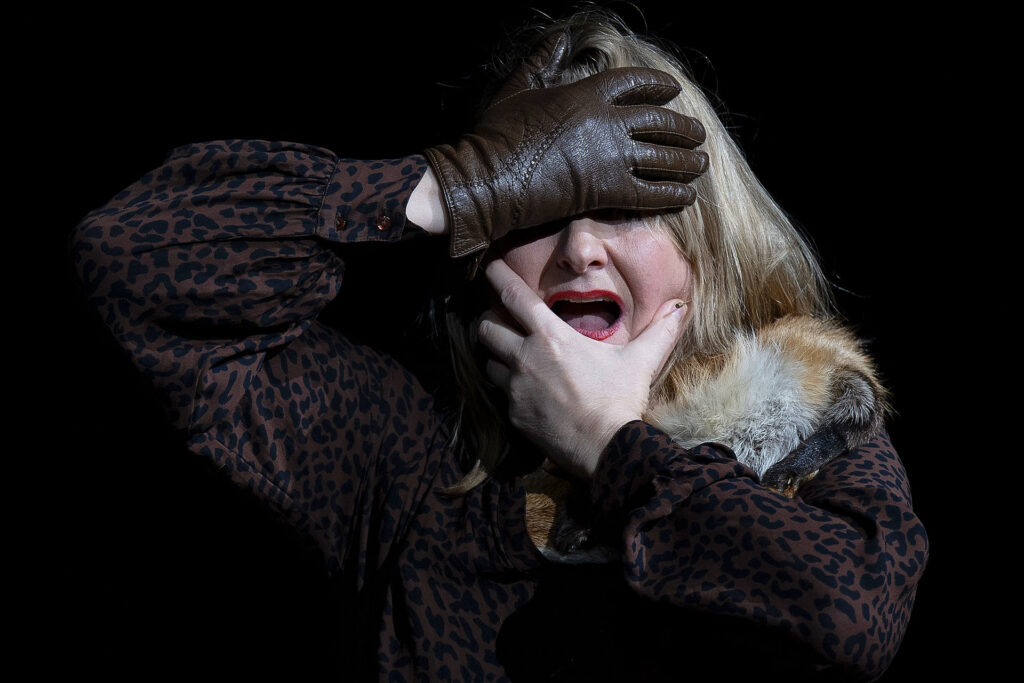
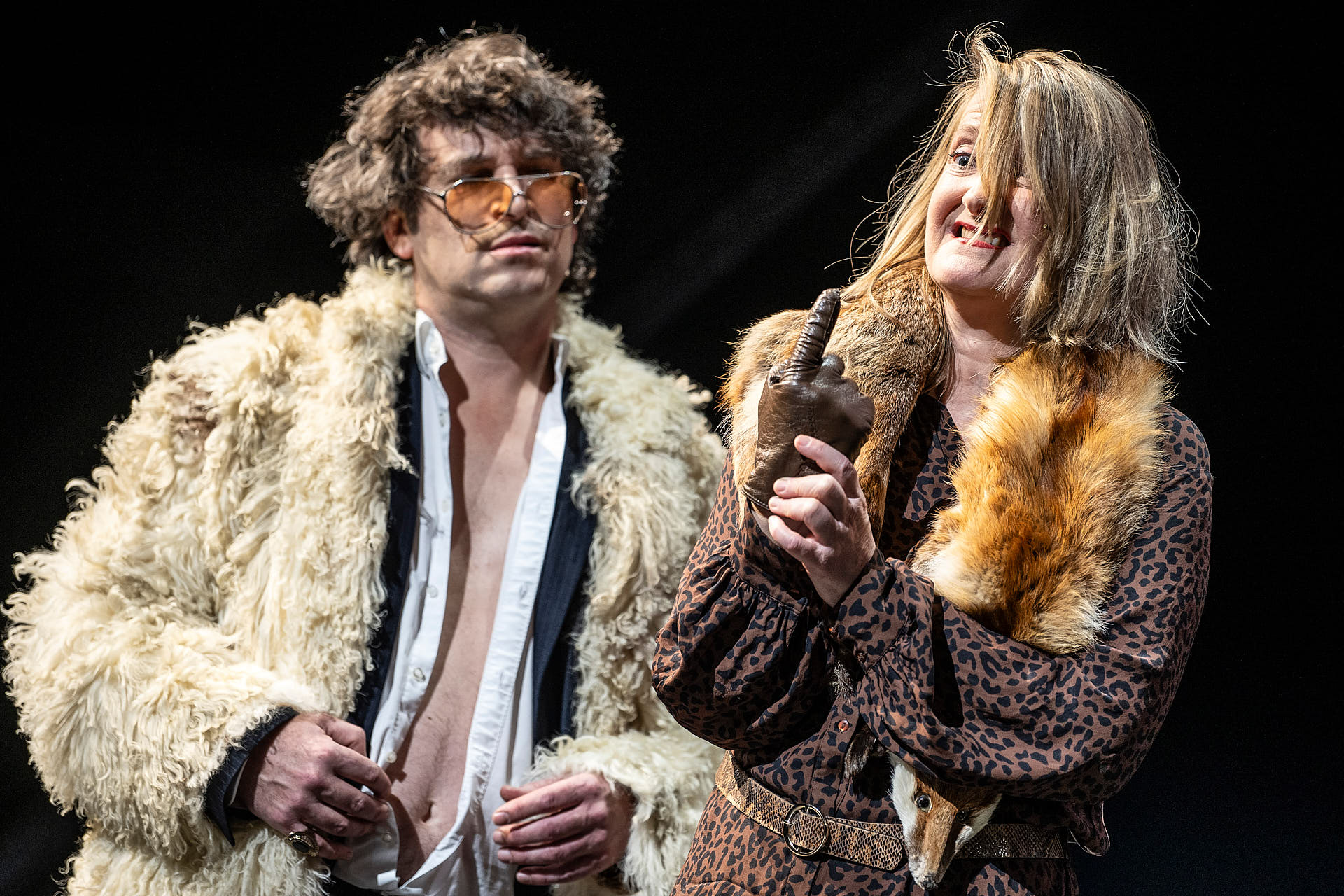
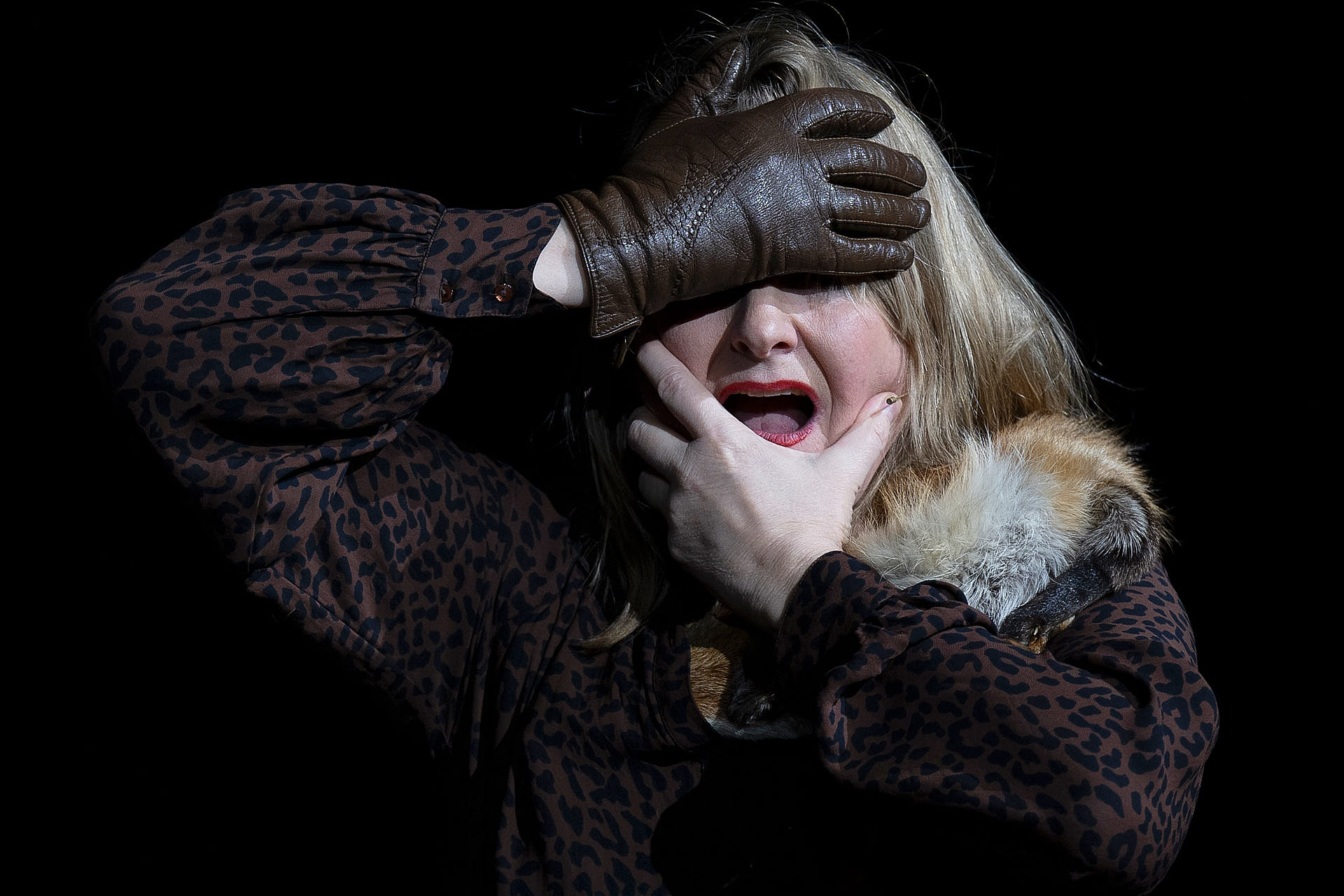
For as long as they are not taking their clothes off, both of them are draped in a lot of dead animal: fox fur collars, fur coats, snakeskin boots, as if the mercilessly animalistic nature of their hunting instinct still had to be underlined. Here too: it is too much.
Weightless in the tilting mirror
For the evening, the chamber play of the Kleist–Clausen duo plus the Kuss Quartett ensemble would have been more than enough. The string quartet, dressed in cassocks, drops in passages from Leoš Janáček’s quartets Kreutzer Sonata and Intimate Letters, which seem less to underscore the action than to comment on it in real time – nervous and feverish, yearningly post-Romantic, shimmering, cool or luxuriant. Nico and the Navigators want more. They complicate their Laclos–Müller adaptation with a tiltable glass set element that functions in turn as mirror, as simple pane of glass and as projection surface onto which 2D and 3D image sequences are played. It is sophisticated and offers plenty for the eye. Movements that the dance duo Yui Kawaguchi and Martin Buczko execute lying on the floor appear almost weightless in the tilting mirror: lying is flying.
Striking effects, rumbling sounds
In other scenes, Kawaguchi and Buczko wander through a virtual staircase, pantomiming their way down steps that exist only on film. Striking effects, but ones that could just as easily be used in any other piece. They contribute little to the interpretation of the Quartett constellation of characters. And as if the Janáček string quartets could not carry the piece, as if the Kuss Quartett – and the additionally deployed trumpet-and-percussion duo – were not enough, the acoustic interstices have to be permanently filled with ominously rumbling sounds. It is too much.
Sardonic humour
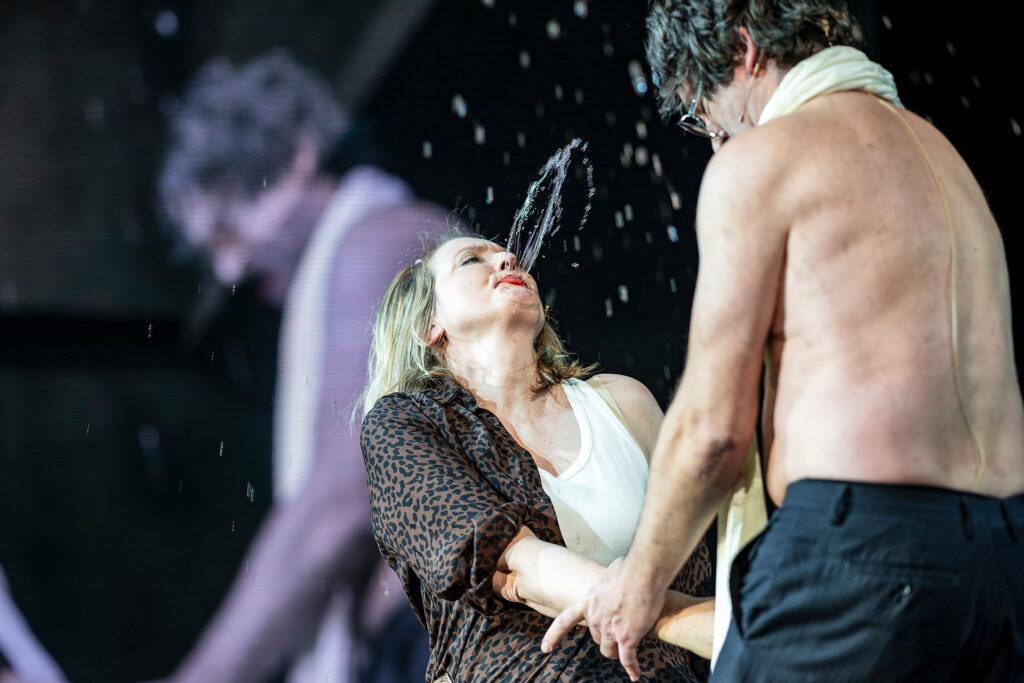
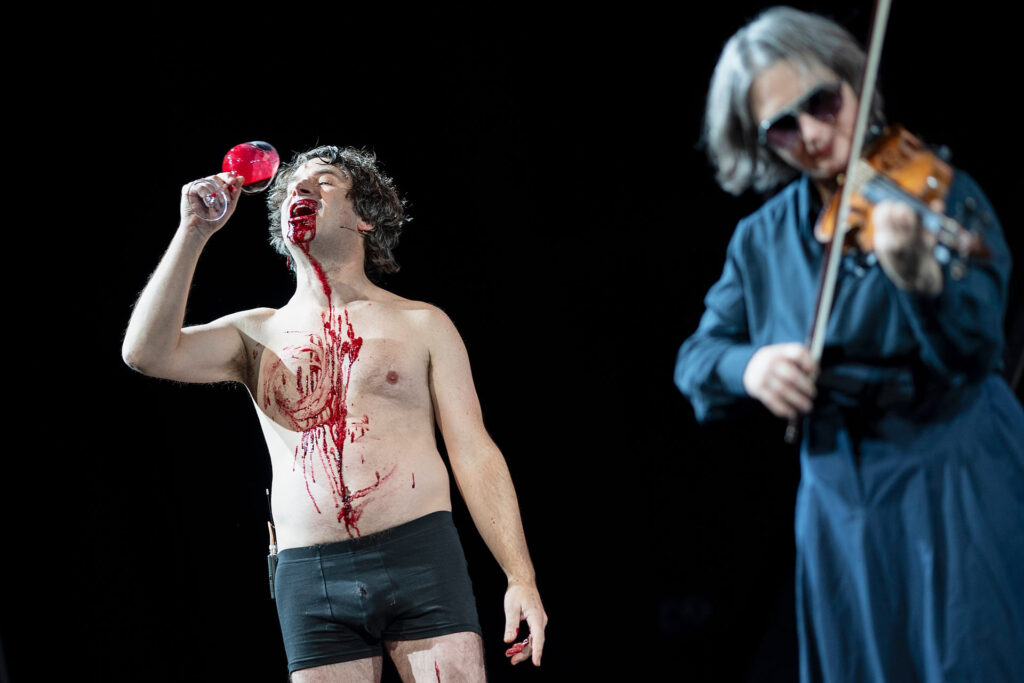
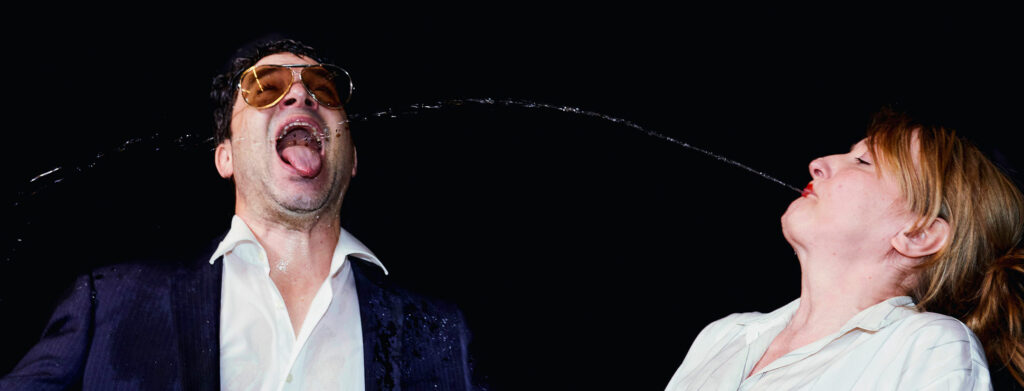
Those who expose themselves to the Laclos–Müller duo know what they are in for: the piece leaves nothing out, from sexual perversion to desecration of corpses and faecal disgust, all the way to the suicide of Madame Tourvel in an alcohol- and blood-soaked frenzy. The performers on stage spare neither themselves nor their audience. The strength of the production is that, despite everything, it never loses its sense of play, its sardonic humour. Its weakness is the excess.
Review round-up
Sören Kittel of the Berliner Morgenpost (5 December 2025) encountered an “exuberantly powerful production in images and sound”, indeed an “explosion of creativity” at the Radialsystem. Heiner Müller’s “crude texts” were, he wrote, “presented precisely and in all their rawness”.
For Andreas Montag of the Mitteldeutsche Zeitung (6 December 2025) it was “a very strong evening”. The team confronts Müller’s text “with the emotional string quartets of Leoš Janáček (played live by the Kuss Quartet), jazz by Paul Hübner (trumpet, sounds) and Lorenzo Riessler (percussion), as well as the furious dancing of Martin Buczko and Yui Kawaguchi)”.
[…] cruel and comic. Material of a Shakespearean cut. And what a magnificent evening Nicola Hümpel (concept and direction), Oliver Proske (set and video), and dramaturg Sergio Morabito have crafted from it. “Quartett zum Quadrat” is the title of their interpretation of Müller’s text. […] In the current production, Annedore Kleist (Merteuil) and Martin Clausen (Valmont) shoulder the largest burden. They do so with brilliance: two undead beings for whom intimacy holds neither secrets nor dignity […] A very powerful evening.
Pure despair — that is what Heiner Müller’s drama “Quartett” is about. The attempt to numb existential emptiness with cynicism and habitual greed is at an all-time high. Müller, who died 30 years ago in Berlin, arranged his “Quartett” (based on the epistolary novel “Gefährliche Liebschaften” by Choderlos de Laclos from 1782) in a space ranging from a “Salon vor der französischen Revolution” to a “Bunker nach dem 3. Weltkrieg”.
Cruel exposure
An endgame of civilisation, in which the two acting figures (who exchange roles and also embody two additional characters) strip themselves bare to recognisability — cruel and comic. Material of a Shakespearean cut. And what a magnificent evening Nicola Hümpel (concept and direction), Oliver Proske (set and video), and dramaturg Sergio Morabito have crafted from it. “Quartett zum Quadrat” is the title of their interpretation of Müller’s text. The team confronts it onstage with the emotional string quartets of Leoš Janáček (performed live by the Kuss Quartet), jazz by Paul Hübner (trumpet, sounds) and Lorenzo Riessler (percussion), and the furious dance of Martin Buczko and Yui Kawaguchi.
Nico & The Navigators were founded in 1998 by Nicola Hümpel and her partner Oliver Proske at the Bauhaus Dessau. Based in Berlin since 1999, they have developed an internationally acclaimed form of music theatre defined by an exciting collaboration of language, music, and choreographic interventions.
Brilliant performers
In the current production, which has now premiered at Radialsystem Berlin, Annedore Kleist (Merteuil) and Martin Clausen (Valmont) indeed carry the largest burden. They succeed brilliantly: they embody two undead beings for whom intimacy holds no secret and no dignity. Pleasure becomes an end in itself, a way to escape the horror of facing themselves. Their hunger for power turns them into perpetrator and perpetrator of two women, one of whom (played by Martin Clausen, the actor portraying Valmont) will die.
A very powerful evening.
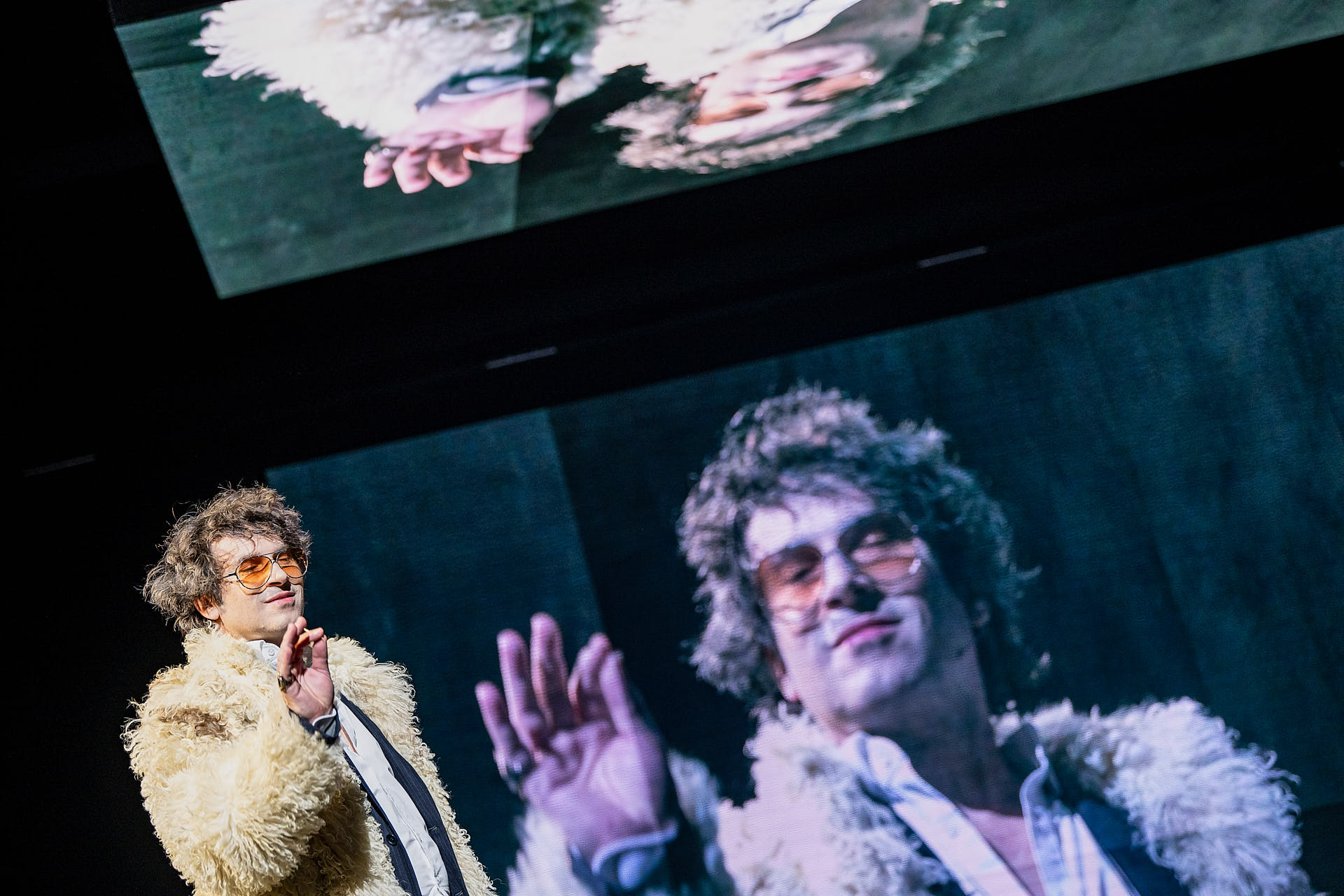
[…] such combinations are precisely the speciality of Nico and the Navigators, in order playfully to overcome conventional modes of performance and, in the process, to blow works apart. […] One technical and visual high point is provided by Oliver Proske’s mirror wall, which can also be a screen for close-ups of the faces of Valmont and Merteuil, and furthermore a window into a virtual 3D world in which the bunker suggested by Müller can be entered – and in which the two dancers, at one point, disappear entirely with their whole bodies. Very impressive.
“Quartett zum Quadrat” after Heiner Müller and two string quartets by Leoš Janáček – concept, direction, costumes Nicola Hümpel, set and video technology Oliver Proske, music Kuss Quartett
The idea of combining Heiner Müller’s play, often staged in the German-speaking world, with the two rather rarely performed string quartets by Leoš Janáček seems abstract and enticing at the same time. Quartett is a two-person play in which a man and a woman, in the course of a relentless battle of the sexes, also play two other women for each other, swapping genders, until the man, dying, is defeated in the role of a woman – in Müller’s mocking self-assessment, a mixture of Jean Genet’s The Maids and the Peter Alexander film farce Charley’s Aunt from 1963. Janáček’s Kreutzer Sonata, in turn, goes back to a story by Tolstoy in which Beethoven’s sonata of the same title is the accompanying music to an adultery story, in which the Czech composer above all felt the misfortune of the punished woman. To square these two pieces of contrasting temperament, as devised by Andreas Hillger, dramaturg of Nico and the Navigators, is therefore an enormous leap, or rather a split.
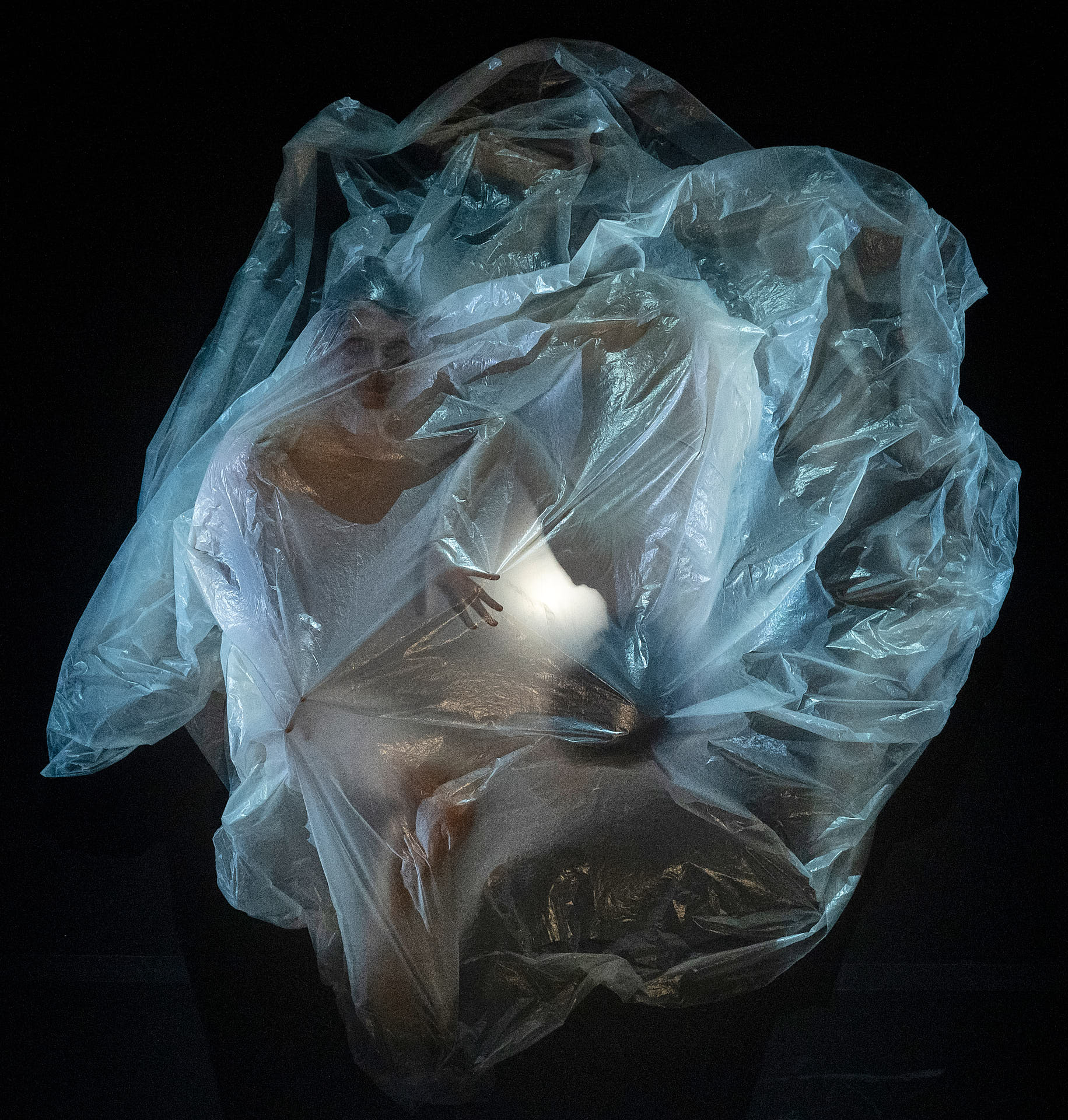
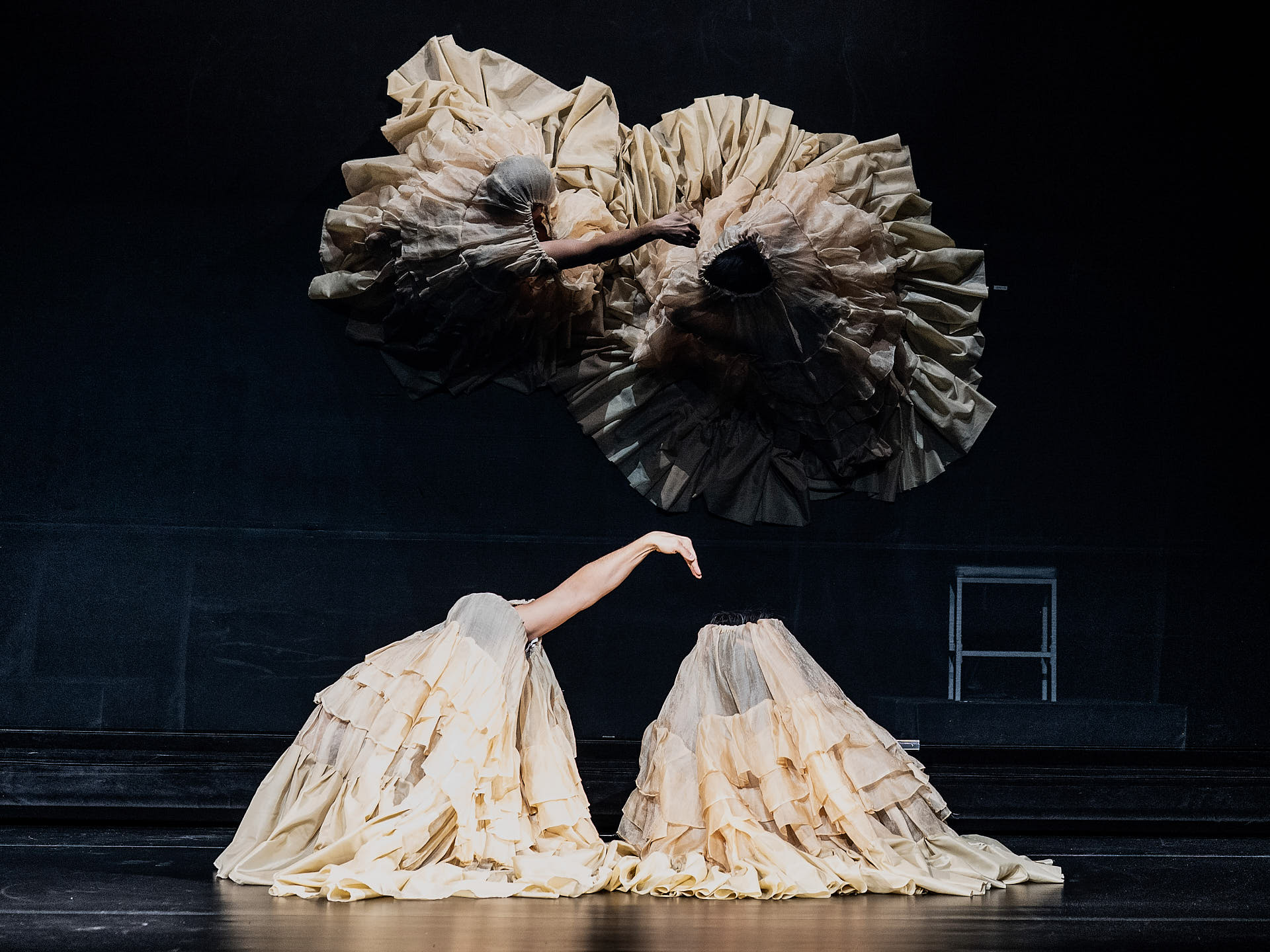
On the other hand, such combinations are precisely the speciality of Nico and the Navigators, in order playfully to overcome conventional modes of performance and, in the process, to blow works apart. Thus at first two figures lie entangled in one another under a gauze hood as if in a snakes’ egg, a slanting surface above them serving as a mirror that doubles them both. The Kuss Quartet, with Jana Kuss (violin), plays the first movement of the Kreutzer Sonata standing – the whole arrangement highly artificial and cool.
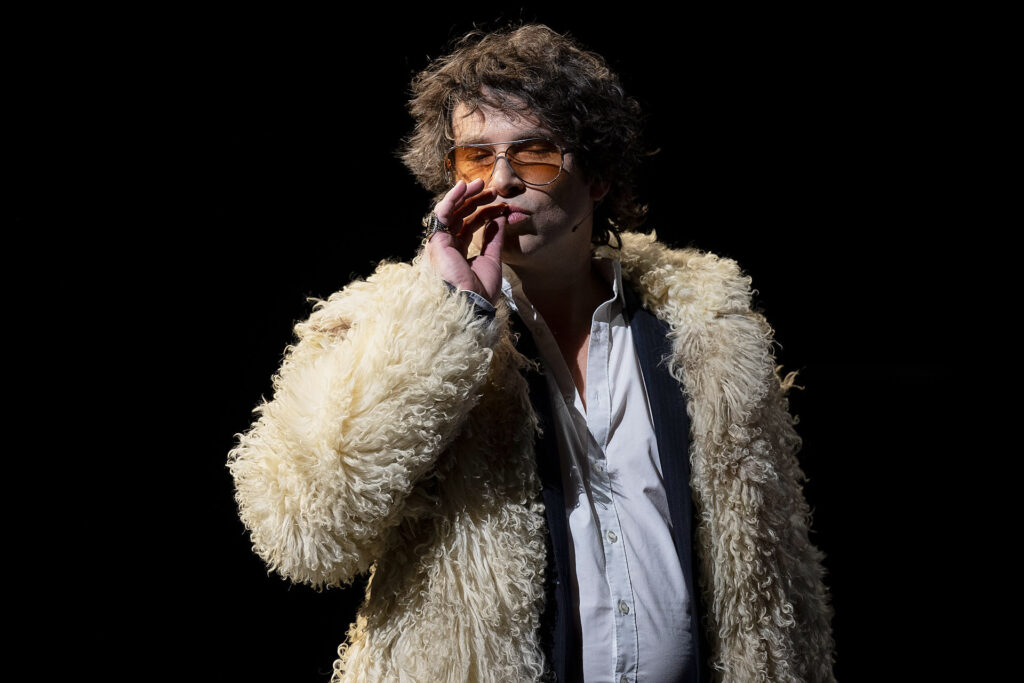
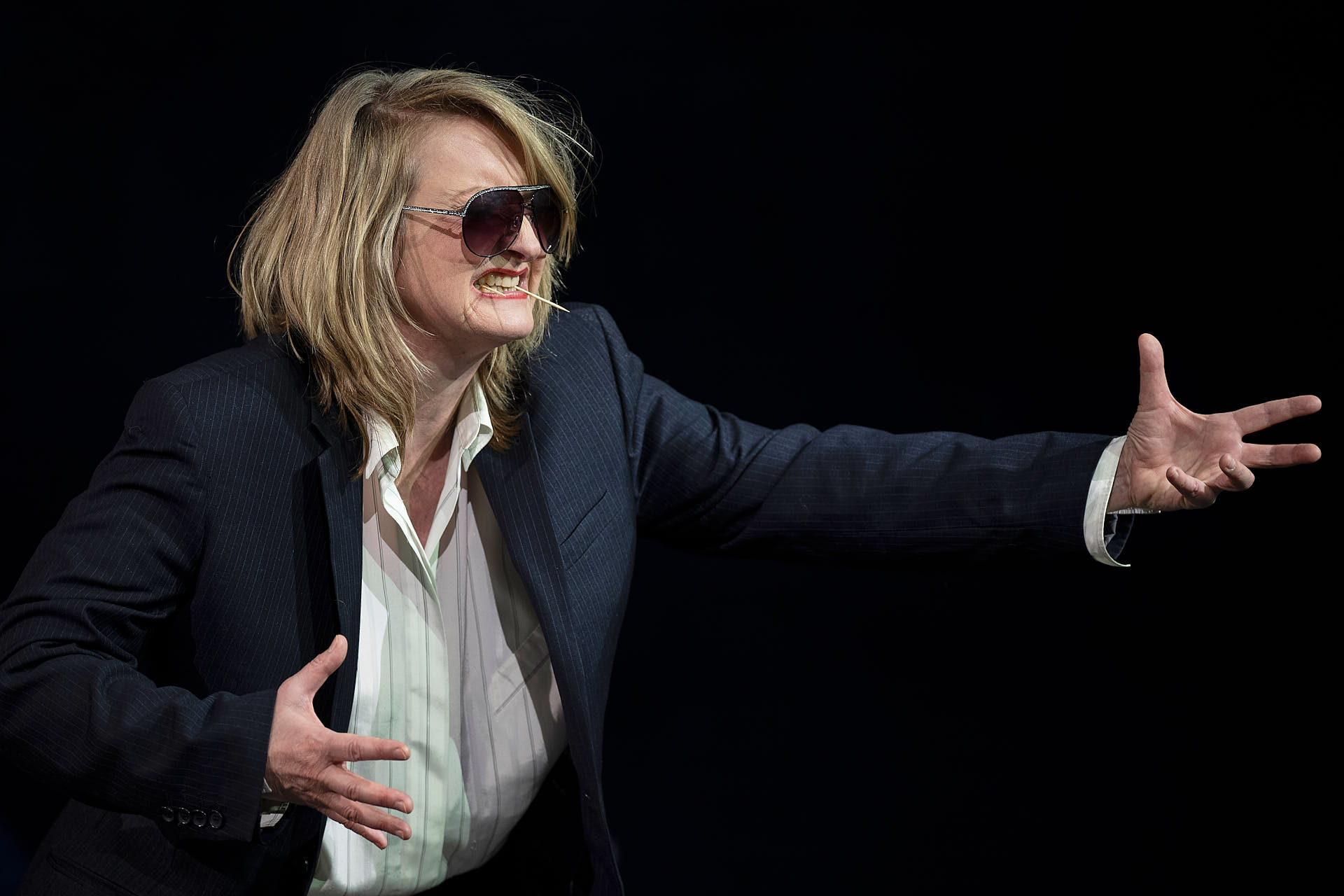
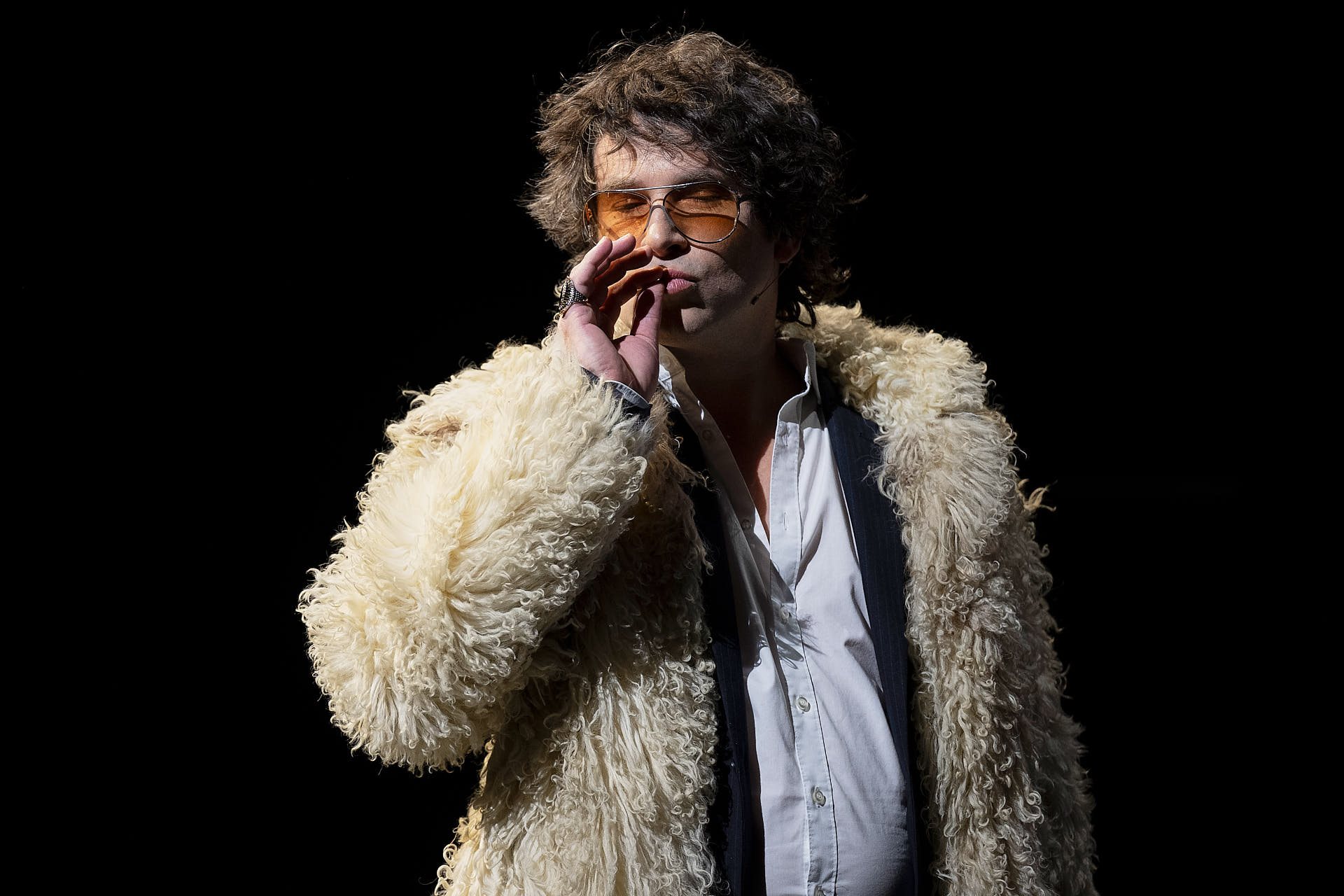
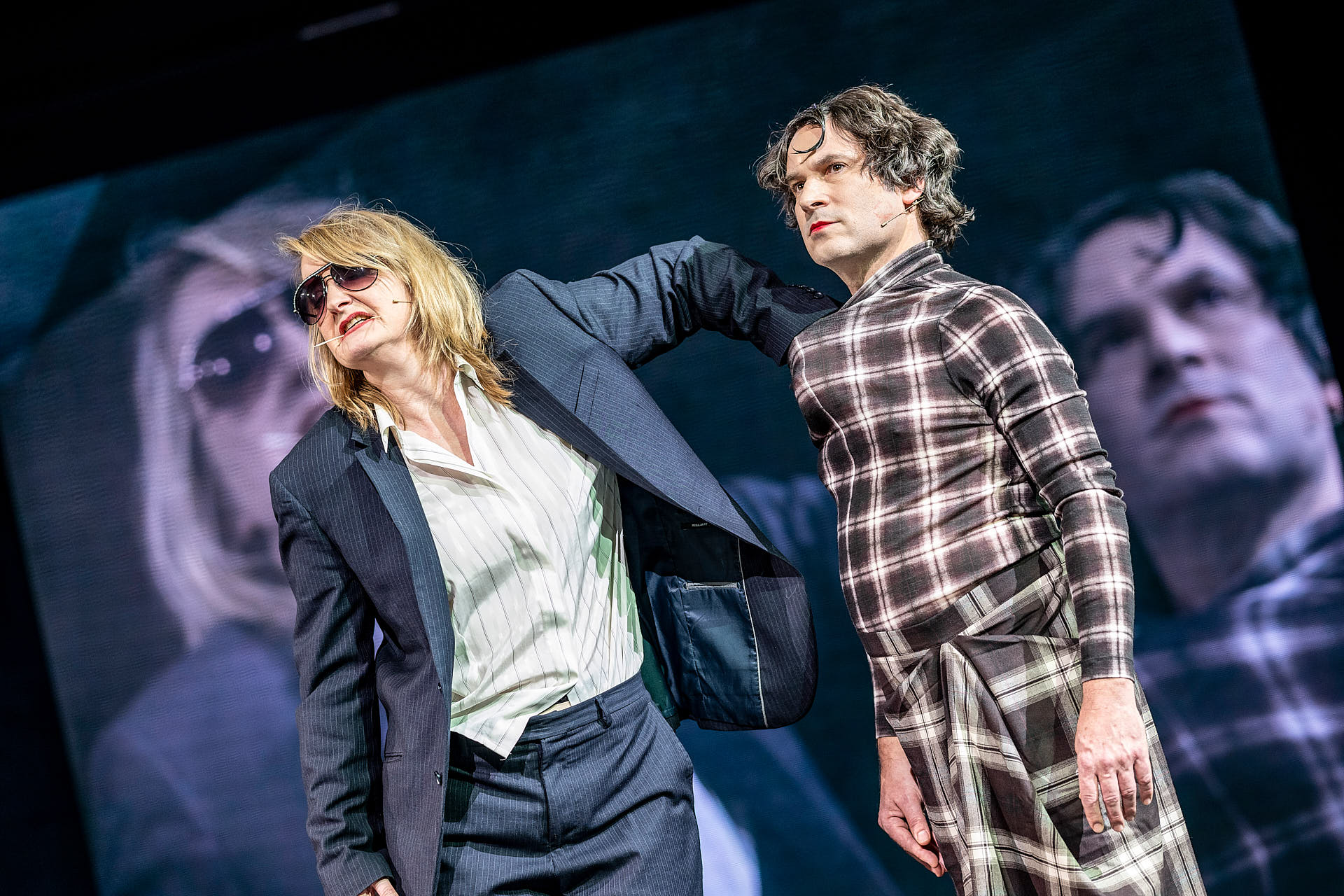
With the entrance of Annedore Kleist as Merteuil and Martin Clausen as Valmont, a different note is struck by their costumes. In Müller’s text they consider “rubbing their furs against each other” as an expression for animalistic sex. Nicola Hümpel has costumed Merteuil with snakeskin boots and a fox collar of the kind worn decades ago by pensioners who could not afford a fur coat. Clausen’s Valmont, by contrast, wears Atze Schröder-style aviator glasses and a sort of polar bear coat as a sign of his run-down life as a seducer. Admittedly, Müller’s stage direction “a salon before the French Revolution, a bunker after the Third World War” leaves the placing of the characters largely open, but here trash is supposed to caricature what is inside – which in turn stands in a certain contrast to Müller’s deliberately obscene language that celebrates every humiliation. To match this, or perhaps rather not, Clausen plays a drunken, dying Valmont at the end, half slurring his words.
But there are also levels of a different format. When, for example, Martin Buczko and Yui Kawaguchi, as male and female dancers, double the other couple to form a real quartet. Or when Paul Hübner on trumpet and Lorenzo Riessler on percussion set a sound world of tensely jazzy tones against the Kuss Quartet. Disparateness thus seems to be the principle.
One technical and visual high point is provided by Oliver Proske’s mirror wall, which can also be a screen for close-ups of the faces of Valmont and Merteuil, and furthermore a window into a virtual 3D world in which the bunker suggested by Müller can be entered – and in which the two dancers, at one point, disappear entirely with their whole bodies. Very impressive.
However, this technical and musical opulence does not lead to a thorough exploration of the play, for the text here is only one part of a vast apparatus which, with the cameras, also forces the acting style of the two characters towards them and makes the music appear dominant. It certainly has great visual value, but the almost two and a half hours (probably the longest Quartett production there has ever been) nonetheless slow down the impact that ought to emanate from Müller’s play.
Berlin’s off-music theatre is quivering: Nico and the Navigators fuse Müller’s dystopian play „Quartett” with Janáček’s string quartets, creating images of astonishing poetry and, in the intense interpretation of the Kiss Quartet, moments of expressive intensity.
Berlin’s off-music theatre is quaking: Nico and the Navigators link Müller’s dystopian endgame „Quartett" with Janáček’s string quartets
The performance is truly too beautiful to be real: “Man and woman and woman and man / reach toward divinity.” Even in the Bible, where God in heaven famously plays a leading role, significant doubts arose centuries earlier about Schikaneder’s anachronistic concept of love; in Matthew 5:28 we find both the specific occasion and the general rationale: “But I tell you, anyone who looks at a woman lustfully has already committed adultery with her in his heart.” Countless touches, countless events have transpired.
And who knows this better than Vicomte Valmont and his companion, the Marquise de Merteuil—the diabolical duo from Choderlos de Laclos’ 1782 epistolary novel "Les Liaisons dangereuses", which Heiner Müller honored two centuries later in his play „Quartett", transforming it into a dialectically dense dystopia in which horrific regression turns into fascination. Few plays are as cynically nihilistic and brutally inhuman in dialogue as this one. Even fewer replace every question mark with a period, as here. All doubts are removed; the claustrophobic setting—both a “salon before the French Revolution” and a “bunker after the Third World War”—and its inhabitants know no future. Everything is broken. Fascinatingly broken. An endgame with two protagonists who feel Lacanian jouissance only in imitating one another (hence the title Quartett). Thus, in the destruction of all they may once have longed for.
Luca Francesconi set Müller’s piece to music in 2011 as an opera in thirteen scenes, writing the libretto himself. Following Rihm’s „Hamletmaschine" (1983) and Dusapin’s „Medeamaterial"(1992), this was another successful attempt to translate the playwright’s hermetic text blocks into sound. In all three cases, dissonance functions as both musical and semantic-semiotic idiom; the stage works embrace Müller’s rhetorical rigor. The music theatre company Nico and the Navigators, always searching for alternative forms and formats, now takes a different path. In their new work, somewhat awkwardly titled "Quartett zum Quadrat", they interlace Müller’s play with Leoš Janáček’s two string quartets.
The dramaturg Andreas Hillger’s idea (who, reportedly, left the project after a dispute with director Nicola Hümpel, after which Sergio Morabito stepped in) is not without urgency: Janáček’s string quartets deal, more or less directly, with precarious love affairs ending in misfortune. The first piece is named after Tolstoy’s grim tale "The Kreutzer Sonata", in which a certain Pozdnyshev kills his wife upon discovering her affair with the violinist Truchatschevsky; the second quartet, "Intimate Letters", is a homage to Kamila Stösslová, nearly forty years his junior, in whom the composer fell hopelessly in love in the late autumn of his life.
The question remains: how can this—especially with the additional musical textures provided by Paul Hübner’s trumpet and percussion compositions, and a choreographic layer from the dance duo Martin Buczkó and Yui Kawaguchi—be made theatrically convincing? Director Hümpel (also responsible for the costumes) and set designer Oliver Proske seek salvation at Berlin’s Radialsystem through visual overload. This produces images of astonishing poetry (especially Proske’s “bunker” videos and mirrored characters are highly imaginative) and, in the intense, intonationally unsettling interpretation of the Kiss Quartet, numerous expressive moments—but the core, Müller’s play, is put at serious risk.
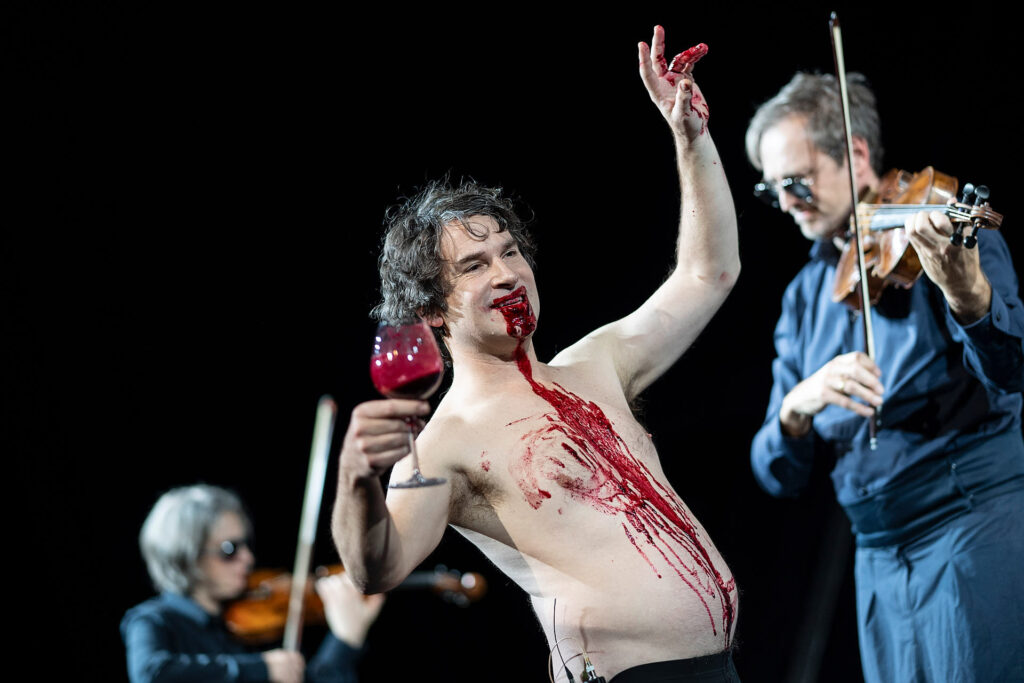
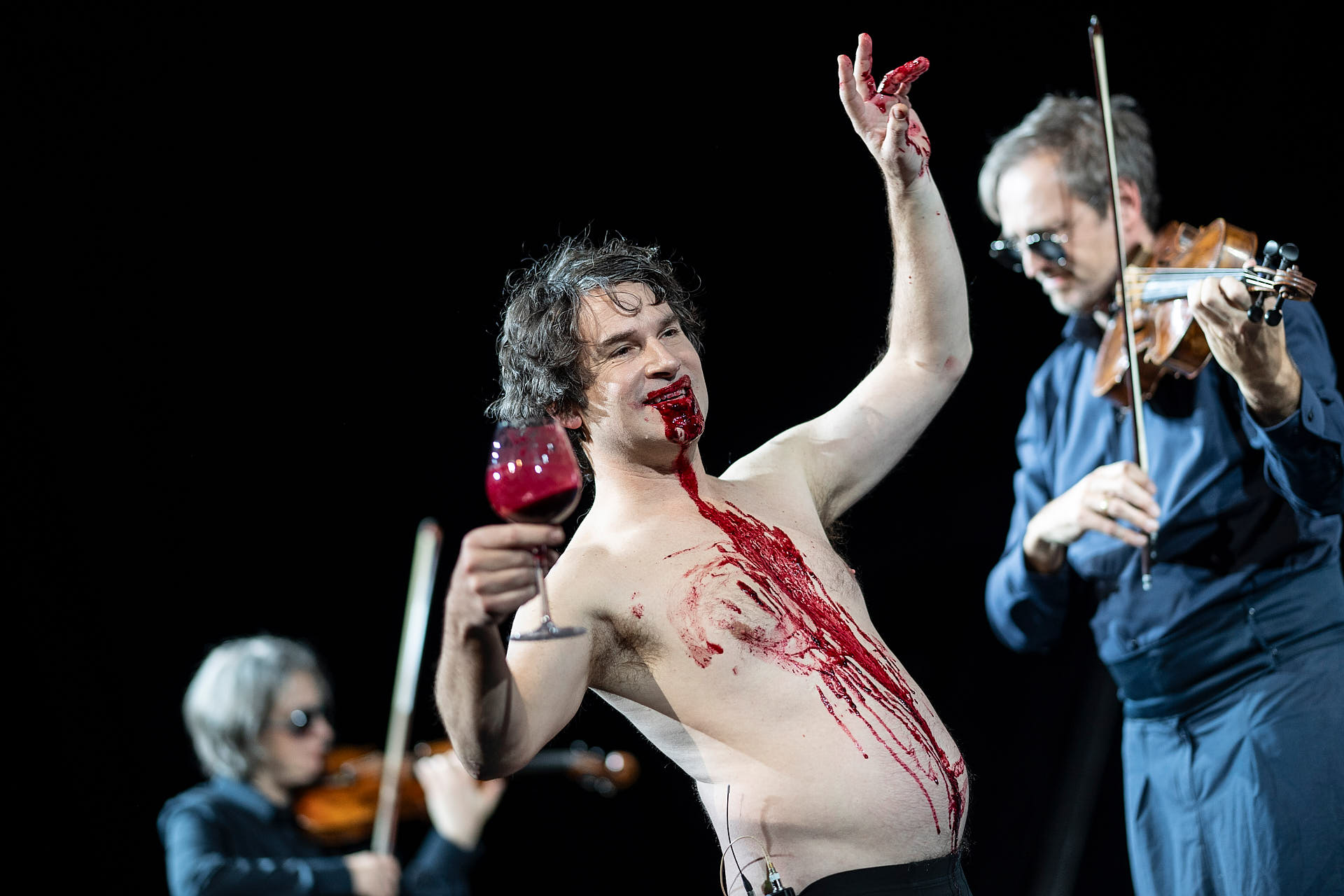
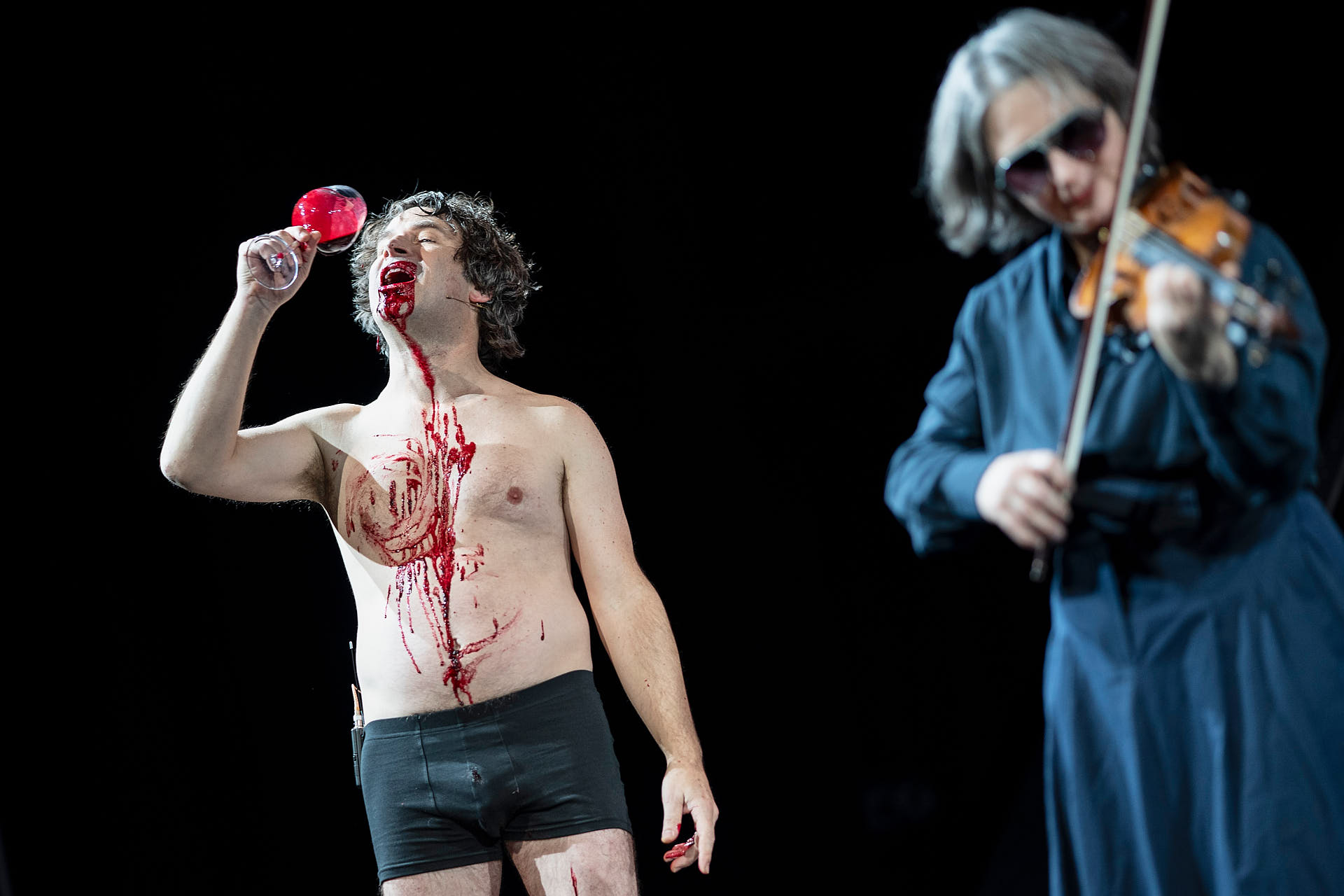
Not only does the work fragment into small mosaic pieces, contrary to Müller’s intention; „Quartett" allows for pauses and fermatas but resists dissolving its hermeticism. Even more problematic is the awkward characterization. Annedore Kleist convincingly portrays Merteuil’s tormented existence, but never truly embodies the Marquise as a nihilist, a wicked woman hating her own decay—a shortcoming emphasized as the actress more convincingly plays the coquettish “chick” Volange. Kleist lacks the hardness, the cold malice Müller wrote into the Marquise (which Glenn Close brilliantly embodied alongside the mischievous John Malkovich in Stephen Frears’ legendary 1994 film adaptation). Martin Clausen, playing Vicomte Valmont, is far more convincing (both wear furs—he in lambskin, she in mink and leopard print, since they “rub against each other’s hides”). A degenerate snob capable of both seduction and debauchery, lord and servant, man and woman. Hilariously comic as he mimics Madame de Tourvel as a Catholic statue—but precisely in this comedy lies danger: it softens what neither Müller, Tolstoy, nor Janáček made unequivocally clear: disillusioned, disruptive, and obstructive relationships yield nothing but pain. When Clausen as Valmont drinks the theater-blood-filled goblet and (perhaps unintentionally) slips into slapstick, it feels somehow wrong—a slapstick amid the tragedy of life.
Content Note
The production addresses themes including psychological and sexualised violence, abuse of power and destructive relationships. Stage blood is used on stage. Certain scenes may be disturbing or distressing for some audience members.
A production by Nico and the Navigators, funded by the Berlin Senate Department for Culture and Social Cohesion.
In cooperation with Radialsystem. The original text is used with the permission of henschel SCHAUSPIEL Theaterverlag Berlin.
Tickets for this date are not available yet. Leave your mail adress to get notified when tickets are available.